
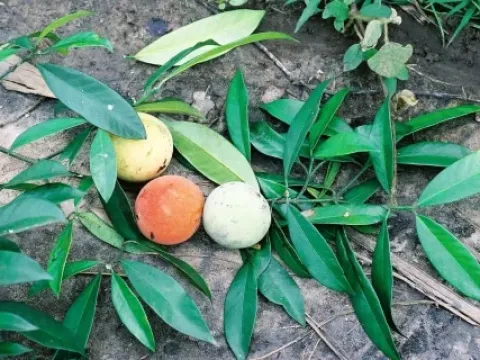
Bitter kola
Garcinia kola
Propagation of Garcinia kola is primarily achieved through seeds, which must be planted shortly after harvest as they rapidly lose viability if allowed to dry out completely.
What the section contains
Bitter kola
The ideal time for sowing is at the beginning of the rainy season, as the high ambient humidity and moisture levels facilitate a successful germination process.
Seeds should be sown in prepared nursery beds with partial shade, protecting the developing seedlings from the harsh tropical sun during their initial growth phase.
The potting medium should be well-drained and organic-rich, ensuring that the roots develop without waterlogging, which is a common cause of seedling mortality.
Once the seedlings reach a height of approximately 40–50 centimeters, they are typically transplanted to their permanent locations, allowing enough space for their eventual expansion.
Garcinia kola, commonly known as bitter kola, is a medium-sized evergreen tree in the Clusiaceae family, native to the tropical forests of West and Central Africa.
The species thrives in tropical climates characterized by high annual rainfall and consistent temperatures, typically ranging between 20°C and 30°C throughout the year.
Soil requirements include deep, fertile, and well-drained loams; while the plant loves humidity, it cannot tolerate stagnant water, which often leads to root rot issues.
In agroforestry systems, the tree performs well under the canopy of larger forest species, which helps to mitigate intense solar radiation and maintain a favorable microclimate.
Regular maintenance, including the application of compost or mulch, is essential to sustain soil fertility and promote vigorous vegetative growth in younger trees.
Garcinia kola is known for its slow growth rate, with trees typically requiring 8 to 10 years to reach the onset of their productive fruit-bearing phase.
A single mature tree can produce hundreds of fruits annually, with the yield depending heavily on the age of the tree and the quality of the soil environment.
Peak production is usually observed in trees that are between 20 and 40 years old, provided they have received adequate space and nutrient management throughout their life.
The fruit, which is a drupe containing several seeds, is the primary economic component, valued for its therapeutic properties and use in traditional medicine across Africa.
Maximizing yield involves careful pruning to maintain tree health and ensure that energy is directed towards the development of healthy, high-quality seeds.
The most significant threats to Garcinia kola cultivation include various fungal diseases that target the root system, especially in areas with poor drainage or excessive soil moisture.
Insect pests, such as leaf-eating beetles and wood-boring larvae, pose a constant threat to both young seedlings and the integrity of the trunks of more mature trees.
Termite infestations can severely compromise the structure of the bark and trunk, making regular monitoring and preventive measures a necessity for plantation health.
Weed control is essential during the early stages of growth, as competing vegetation can easily deprive young saplings of necessary water and soil nutrients.
During prolonged rainy seasons, bacterial leaf spots may occur, necessitating proper spacing and canopy management to ensure adequate airflow and prevent disease spread.
Harvesting bitter kola is a labor-intensive activity that requires careful climbing or the use of long poles to reach fruits located high up in the tree's canopy.
The timing of the harvest is critical; fruits are collected when they show signs of physiological maturity, indicated by a change in color and a specific characteristic aroma.
Once harvested, the fruits are processed to extract the seeds, which are then cleaned of pulp and fiber and subjected to a drying process to ensure shelf stability.
Workers must exercise caution to avoid damaging the fruiting branches during the harvest, as the trees are susceptible to physical breakage due to their wood structure.
Properly processed seeds can be stored for several months in dry, cool conditions, maintaining their quality for export or local market distribution.