
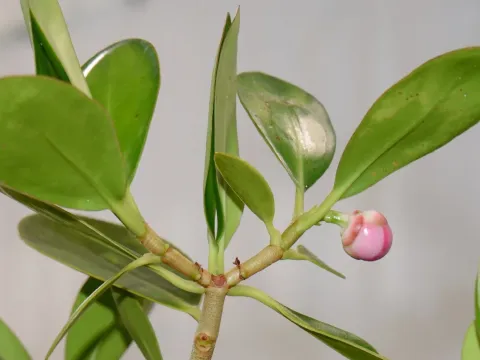
Clusia minor
Clusia minor
Clusia minor is a member of the Clusiaceae family, recognized for its evergreen, leathery foliage and its origins in the tropical regions of the Caribbean and South America. It serves as an ornamental specimen in tropical landscaping and indoor cultivation.
What the section contains
Clusia minor
The culture thrives in well-draining, humus-rich soil. In its native environment, it is known for its ability to adapt to diverse growing conditions, including thin soils on rock substrates, provided that moisture is available.
Climatic requirements focus on warmth and humidity. It is strictly a tropical species, requiring temperatures consistently above 15°C. Exposure to frost will cause severe damage or death to the plant tissue within a short timeframe.
Optimal growth is achieved under bright, indirect light conditions. While the plant shows some tolerance to partial shade, full sun exposure, especially in younger stages, must be managed to prevent leaf scorch and dehydration.
Agrotechnical maintenance includes regular irrigation during the growing season while ensuring the substrate dries slightly between waterings. Fertilization with balanced NPK formulas supports lush leaf development and strong root structure.
The most common pests affecting Clusia minor include scale insects and mealybugs, which attach to the stems and leaf axils. Mechanical removal followed by systemic insecticide application is the standard control protocol.
Root rot caused by Phytophthora or Pythium species is a major threat linked to poor drainage. Ensuring the planting medium remains porous and not waterlogged is essential for the long-term vitality of the root system.
Fungal leaf spot diseases can develop in conditions with high humidity and poor air circulation. Improving ventilation around the foliage is a primary preventative measure against these pathogens in greenhouse environments.
Spider mites represent a risk, particularly in indoor environments where the air is dry. Maintaining adequate humidity and washing the leaves periodically significantly reduces the likelihood of an infestation.
Integrated pest management strategies should emphasize early detection. Regular inspections of the foliage and growing point are vital to catch biological threats before they reach an economic damage threshold.