
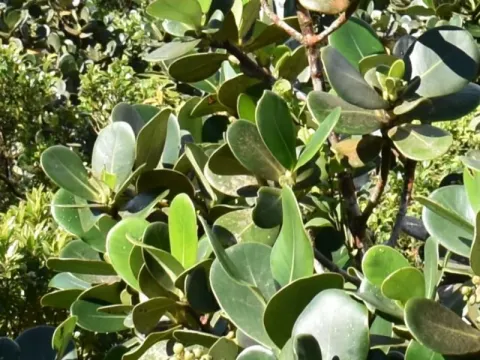
Clusia
Clusia mangle
Clusia mangle, belonging to the Clusiaceae family, is a distinct evergreen plant known for its adaptability in tropical ecosystems. It often begins life as an epiphyte, utilizing host trees before developing a robust root system capable of independent growth in various substrates.
What the section contains
Clusia
The native distribution of this species spans across the tropical Americas and the Caribbean. It thrives in humid environments, often naturally occurring near coastal zones where it demonstrates resilience against varied moisture levels and soil compositions.
For successful cultivation, Clusia mangle requires bright, filtered light. While it can tolerate some morning sun, intense midday rays may scorch its leathery leaves, making location management a priority for healthy foliage development.
The ideal growing medium must be highly porous and well-draining. A mix consisting of orchid bark, perlite, and peat is often recommended to mimic the airy conditions of the plant's natural habitat and prevent root suffocation.
Temperature management is crucial; the plant prefers constant warmth between 20°C and 28°C. Protecting the plant from cold drafts and extreme fluctuations is essential to maintain metabolic balance and prevent premature leaf drop.
Scale insects are among the primary pests affecting Clusia mangle. They tend to congregate along the veins of the leaves, drawing out plant sap and necessitating prompt treatment with horticultural oils or systematic insecticides.
Mealybugs are another common challenge, frequently hiding in leaf axils. Regular inspections of the plant's architecture are necessary to catch infestations early, as these pests can reproduce rapidly in stagnant air conditions.
Root rot is the most significant disease threat to this culture, usually stemming from overwatering or inadequate substrate drainage. Once rot sets in, the plant's recovery is difficult, emphasizing the need for a 'dry-out' period between irrigations.
Spider mites may infest the plant during periods of low ambient humidity. Increasing local humidity or regular leaf cleaning helps create an environment less hospitable to these microscopic pests.
Implementing a strict hygiene routine, including cleaning surfaces and sterilizing pruning tools, is vital to prevent the spread of pathogens and maintain the long-term health of the crop in a controlled environment.