
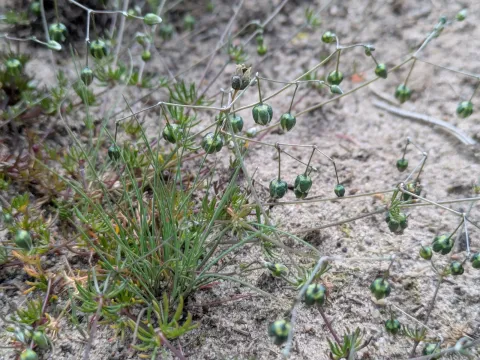
Spring spurrey
Spergula morisonii
Spring spurrey (Spergula morisonii) is an annual herb belonging to the family Caryophyllaceae. It is a highly specialized plant adapted to sandy and nutrient-poor environments, showcasing remarkable resilience in marginal agricultural lands.
What the section contains
Spring spurrey
Originating from the temperate regions of Europe, the plant is typically found in dry, open habitats such as dunes and sandy heaths. Its ability to thrive in such environments makes it a potential candidate for ecological restoration of degraded soils.
The botanical structure of spring spurrey is characterized by a slender stem and delicate, needle-like leaves arranged in whorls. Its root system is relatively deep, allowing it to tap into moisture reserves that are inaccessible to shallower species.
Regarding soil requirements, it thrives in acidic, sandy, and well-drained substrates. It performs poorly in heavy clay or waterlogged soils, which can lead to rapid decay of the root system and plant death.
In terms of climate, spring spurrey is an early-season grower. It is well-adapted to the cool, moist conditions of early spring, allowing it to complete its reproductive phase before the onset of extreme summer heat.
The primary threats to spring spurrey cultivation are fungal infections, specifically root rot diseases caused by soil-borne pathogens. These diseases are most prevalent in seasons with high rainfall, leading to plant thinning.
Soil pests, particularly wireworms, present a significant risk during the germination phase. These larvae feed on the young roots, causing severe stress and often leading to the collapse of young seedlings.
Competition from more aggressive weed species is a major threat in modern agricultural settings. Due to its slow initial growth rate, spring spurrey can easily be overtaken by faster-growing annual weeds.
Nutrient deficiency is technically not a threat but rather a limitation, yet extreme nitrogen starvation can lead to premature senescence of the foliage. This limits the total biomass accumulation available for harvesting.
Managing these threats requires a prophylactic approach. Proper site selection, avoiding areas prone to water stagnation, and using clean, high-quality seeds are essential to ensure the success of the stand.