
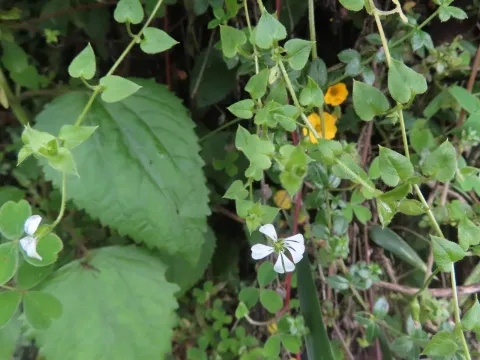
Stellaria cuspidata
Stellaria cuspidata
Stellaria cuspidata is a perennial herb belonging to the Caryophyllaceae family. Naturally occurring in the mountainous and forested regions of the Americas, this species is well-adapted to cool, humid environments where it thrives as part of the local ground flora or understory vegetation.
What the section contains
Stellaria cuspidata
Botanically, the plant is characterized by its fragile, often decumbent stems and lanceolate leaves with a distinctly sharp tip, from which it derives its species name. Its root system is generally fibrous, allowing for efficient nutrient uptake in organic-rich, damp forest soils.
Climatic requirements for successful cultivation include a preference for cool temperate zones. The plant performs best in sheltered environments where temperature fluctuations are minimized and ambient humidity remains relatively high throughout the main vegetative growth period.
Regarding soil, Stellaria cuspidata favors loamy, moisture-retentive substrates with a balanced nutrient profile. In agricultural practice, it is essential to provide consistent moisture without waterlogging the root zone, as the plant is susceptible to hypoxia if the soil becomes excessively compacted.
The agricultural usage of this plant is primarily focused on its potential as a supplementary forage component in highland grazing systems. Its rapid early growth provides valuable biomass during the onset of the growing season when other perennial grasses may still be dormant.
The primary threats to Stellaria cuspidata cultivation are fungal diseases, particularly downy mildew and various forms of root rot. These issues are almost invariably linked to poor air circulation and excessive humidity levels, which favor the proliferation of pathogenic fungi.
Pests that typically impact the crop include slugs and snails, which can cause severe foliage damage in moist, shaded conditions. In addition, aphid infestations can occur during peak growth, potentially leading to stunted plant development and the spread of viral pathogens within the field.