
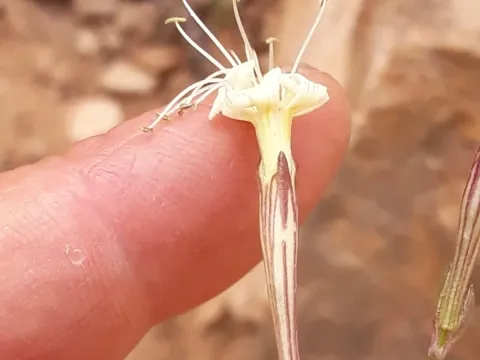
Spreading catchfly
Silene patula
Spreading catchfly (Silene patula) is a herbaceous perennial belonging to the Caryophyllaceae family. Naturally, this species originates from Southern Europe and the Mediterranean region, where it thrives in open, rocky, and sun-exposed habitats.
What the section contains
Spreading catchfly
The plant exhibits a sprawling growth habit with glandular hairs covering the stems and leaves. This morphological trait serves as a crucial adaptation to arid environments, significantly reducing water loss through transpiration and protecting the plant from intense solar radiation.
Regarding soil requirements, the species performs best in well-drained, neutral to slightly alkaline soils. It is essential to ensure that the substrate is not waterlogged, as the roots are highly susceptible to decay in stagnant water, necessitating effective drainage in clay-heavy environments.
The ideal climate for this crop involves long, sunny growing seasons with low relative humidity. While the plant shows considerable tolerance to temperature fluctuations, it requires adequate light exposure to maintain its characteristic growth form and promote flowering.
In agricultural and landscaping contexts, the spreading catchfly is valued for its ability to stabilize poor soils and its minimal maintenance requirements. It serves as an excellent candidate for low-input garden designs where drought tolerance is a primary functional goal.
The primary threats to the cultivation of Silene patula are fungal pathogens, specifically those causing root and crown rots. These diseases are almost exclusively linked to excessive soil moisture and poor air circulation within the planting area.
Insect pests such as noctuid larvae (cutworms) can pose a significant threat by damaging the stems, especially during the early stages of plant development. In addition, spider mites may become problematic during prolonged periods of high heat and low atmospheric moisture.
Effective disease management hinges on proper site selection and spatial arrangement of plants. Ensuring that the foliage can dry quickly after rain or irrigation is the most important cultural practice to prevent the proliferation of pathogenic fungi.
Chemical control should be employed judiciously and only when monitoring indicates that pest or disease levels exceed established thresholds. Integrated pest management strategies, emphasizing preventative measures over reactive chemical applications, are strongly recommended.
Routine scouting is vital to identifying early symptoms of stress or infestation. Prompt removal of infected tissue and sanitation of equipment can prevent the spread of diseases, ensuring the long-term health and vigor of the catchfly population.