
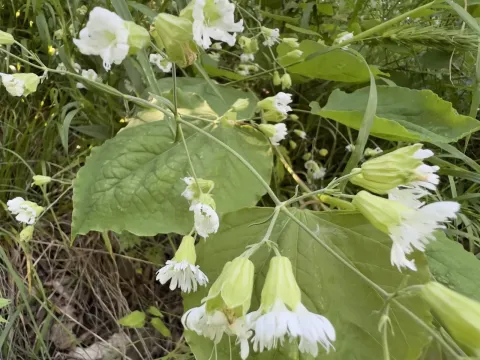
Starry campion
Silene stellata
Starry campion (Silene stellata) is a herbaceous perennial plant native to North America, belonging to the Caryophyllaceae family. It is typically found in woodlands and rocky open areas, forming elegant clumps that contribute to the biodiversity of native ecosystems.
What the section contains
Starry campion
The botanical structure is defined by its whorled leaves, arranged in groups of four along the stem, and its distinct white, fringed petals that resemble small stars. The plant typically reaches a height of two to three feet, making it suitable for middle-to-back layers of flower beds.
In terms of growing requirements, the species prefers well-drained, slightly acidic to neutral soils enriched with organic matter. It thrives in partial shade, mimicking the dappled light found under forest canopies, though it can adapt to sunnier spots if soil moisture is consistent.
Effective agrotechnical practices for this culture involve maintaining adequate moisture levels throughout the growing season, especially during summer heat. Mulching is highly recommended to regulate soil temperature and prevent moisture loss from the root zone.
The plant is primarily utilized in landscape gardening, specifically for shade-tolerant borders, rock gardens, and meadow-style plantings. It is highly valued for its aesthetic appeal and its capacity to serve as a pollinator-friendly plant for bees and butterflies.
Starry campion is relatively robust, but like many perennials, it can suffer from fungal diseases if planted in areas with poor airflow or stagnant water. Common issues include root rot and leaf spot, which are best managed through improved drainage.
Insects like aphids and spider mites can occasionally affect the foliage. It is important to inspect the plant periodically and utilize integrated pest management strategies, such as physical removal or specific biological controls, to keep the population at manageable levels.