
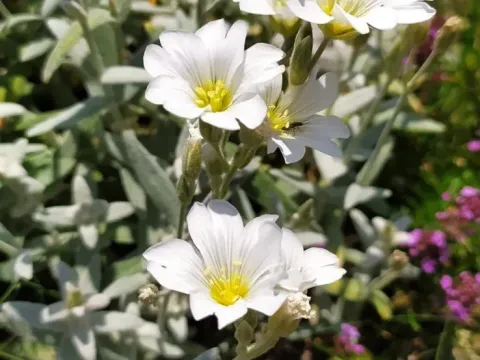
Snow-in-summer
Cerastium biebersteinii
Sowing Cerastium biebersteinii seeds in open ground is best done during the spring months, from April to May. This timing ensures that the soil has sufficiently warmed up to promote rapid and uniform germination.
What the section contains
Snow-in-summer
Alternatively, autumn sowing in October is a viable option, as it allows seeds to undergo natural stratification during the winter. This practice often results in more vigorous plants come springtime.
If starting seeds indoors, sowing should commence in March using well-drained seed starter mix. Ensure adequate lighting to avoid leggy seedlings, which can be structurally weak during the transplanting phase.
When sowing, seeds should be surface-sown or barely covered with a fine layer of sand or substrate. Keep the medium consistently moist but not waterlogged until the first true leaves emerge.
Once seedlings are large enough to handle, thin them out or transplant them to their final location. Spacing should be approximately 20 cm apart to allow for the plant's natural spreading habit.
Cerastium biebersteinii thrives in full sun exposure. It is a heliophilous plant that requires direct sunlight for the majority of the day to maintain its compact growth form and silvery foliage.
The plant demands well-drained, porous soil. It performs exceptionally well in sandy, rocky, or gravelly substrates, where moisture drainage is naturally superior, preventing root decay.
While the species is highly drought-tolerant once established, providing occasional deep irrigation during extreme heat waves can prevent foliage stress and maintain its vibrant aesthetic.
Soil pH preference is generally neutral to slightly alkaline. The plant is remarkably hardy and can withstand harsh winter temperatures without special protection in most temperate climates.
Limited fertilizer application is recommended. Excessive nitrogen leads to rank, sprawling growth and reduces the density of the silver mat, which is the plant's primary ornamental value.
The most significant threat to this culture is high humidity combined with poor drainage, which frequently leads to crown rot and various fungal pathogens affecting the root system.
Proper air circulation is crucial. Densely packed plantings or lack of weeding can trap moisture near the base, creating a breeding ground for fungal diseases like gray mold or powdery mildew.
While relatively resistant to common garden pests, aphids or spider mites may occasionally infest the plant during prolonged dry spells. Use horticultural oils or insecticidal soap if outbreaks occur.
Sanitation is a key component of effective disease management. Pruning back spent flowers and removing any dead or decaying foliage helps to sustain the plant's vigor and prevents disease spread.
In case of fungal infection, remove the affected sections immediately and treat the area with a broad-spectrum fungicide to protect the remaining healthy plants in the bed.