
Cretan sandwort
Arenaria cretica
Description
Growing requirements
Cretan sandwort (Arenaria cretica) is a charming perennial herb belonging to the Caryophyllaceae family. It is endemic to the island of Crete, where it naturally inhabits craggy limestone cliffs and rocky screes, thriving in harsh, nutrient-poor conditions.
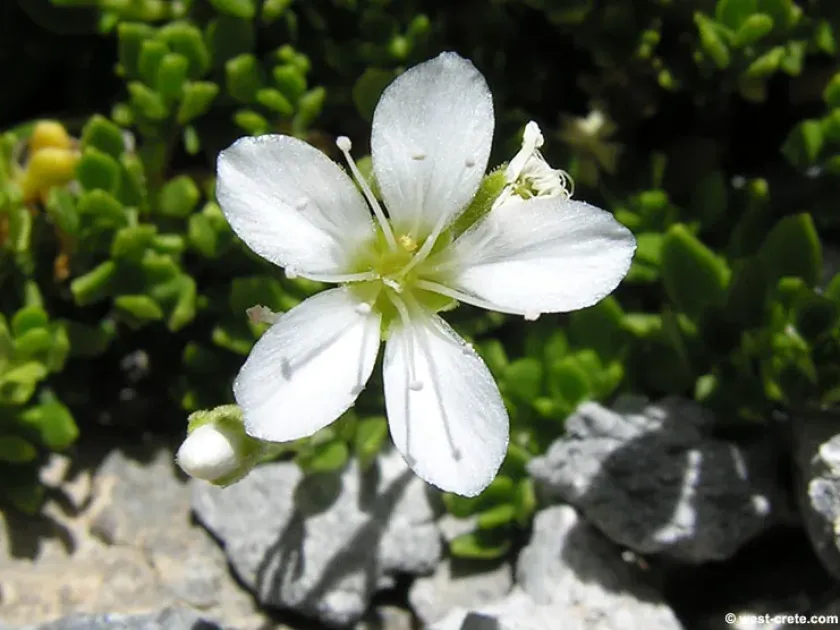
From a botanical standpoint, this species is defined by its prostrate, mat-forming growth habit. Its foliage consists of tiny, crowded leaves that create a dense, moss-like cushion, which eventually becomes covered in small, white, star-shaped flowers during its peak blooming season.
The success of cultivating Cretan sandwort depends heavily on soil composition. It requires a lean, sandy, or gritty substrate with excellent drainage, as the roots are highly susceptible to rot if they remain in saturated, heavy soil for extended periods.
In terms of environmental conditions, this plant demands full sun exposure to maintain its compact shape and ensure profuse flowering. It is well-adapted to Mediterranean climates but can survive in cooler temperate zones if protected from winter moisture and harsh, freezing winds.
Regarding its utility, the Cretan sandwort is almost exclusively used as an ornamental plant. It is highly valued in horticulture for its versatility in rock gardens, gravel beds, and as an edging plant in xeriscaped landscaping designs where low maintenance is required.
Main diseases and pests
The primary health risk for this species is fungal root rot caused by inadequate drainage or excessive soil moisture. Pests such as aphids may occasionally appear during extreme drought conditions, though they rarely pose a threat to the plant's overall viability.