
Corsican sandwort
Arenaria balearica
Description
Sowing dates
The propagation of Arenaria balearica is typically performed in the early spring by sowing seeds in a well-drained, sterile substrate under controlled glasshouse conditions.
Seeds should be surface-sown as they require light for germination, and they should be pressed gently into the soil rather than being buried deep.
Moisture control is paramount during the germination phase, which usually takes several weeks to achieve a successful and uniform stand of seedlings.
Transplanting into the permanent site should be executed once the threat of late spring frosts has passed and the soil has reached a stable temperature.
Vegetative propagation via division is also a viable method, especially during the dormant season or early spring, to multiply existing healthy clumps.
Growing requirements
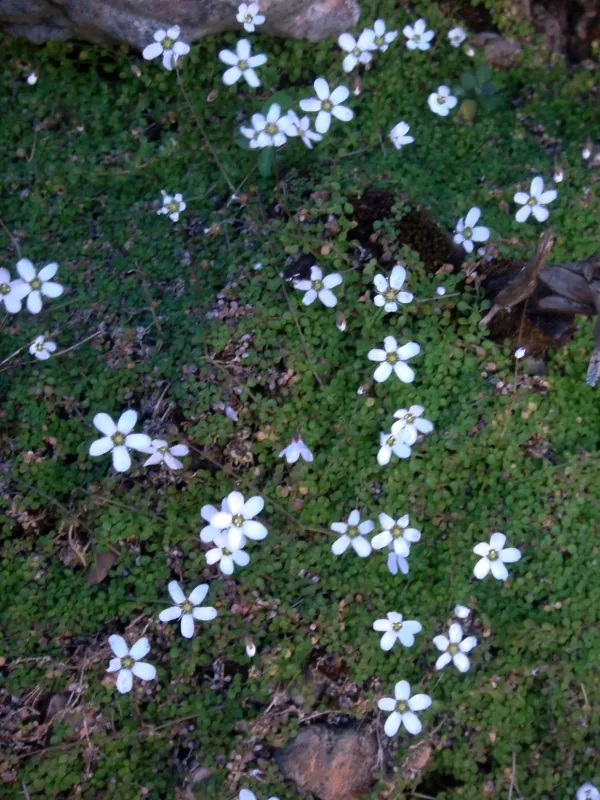
Arenaria balearica is a low-growing perennial belonging to the Caryophyllaceae family, known for its dense, moss-like carpet appearance and small white flowers.
Native to the Balearic Islands, Corsica, and Sardinia, the plant thrives in cool, shaded environments often found in natural rock crevices and mountain slopes.
Cultivation requires semi-shaded locations with protection from intense direct sunlight, which can easily scorch the delicate, tiny foliage.
The soil must be gritty and fast-draining, preventing any water accumulation that could lead to root damage during cooler, wetter months.
It is extensively used in landscape design for filling gaps between paving stones, in rock gardens, or as a decorative component in troughs and containers.
Main diseases and pests
The primary concern for Arenaria balearica is the risk of root rot, which is almost always a result of poor drainage or excessively wet soil conditions.
Slug and snail populations can be devastating to the plant, specifically during humid weather, as they graze on the dense, succulent-like leaf coverage.
Powdery mildew can occur in areas with stagnant air, requiring better ventilation or the use of appropriate systemic fungicides for control.
Proper sanitation practices, such as removing debris and weeds around the plants, are essential to minimize the risk of pathogen accumulation.
Consistent monitoring and providing a layer of coarse grit beneath the foliage can help reduce moisture contact and mitigate common pest pressures.