
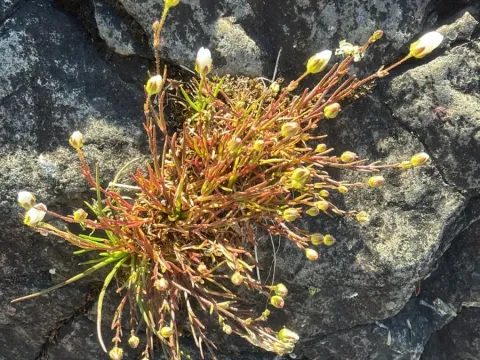
Knotted pearlwort
Sagina nodosa
Knotted pearlwort (Sagina nodosa) is a member of the Caryophyllaceae family. This perennial herb is native to temperate regions of the Northern Hemisphere, where it typically colonizes damp and cool environments.
What the section contains
Knotted pearlwort
The plant thrives in moist soil conditions, frequently appearing in coastal habitats, riverbanks, and marshy meadows. It is well-adapted to various soil textures, including sand and silt, often preferring sites with a stable water supply throughout the growing season.
Botanically, it is distinguished by its nodose stems and opposite leaves that form small bundles in the axils, which is a diagnostic feature of the species. Its shallow root system is adept at anchoring the plant in diverse substrates.
Regarding cultivation requirements, this plant demands consistent moisture and adequate light exposure. While it tolerates a wide range of pH levels, it performs best in soils with high organic content that retains moisture without becoming stagnant.
In agricultural and landscape applications, knotted pearlwort is valued for its soil-stabilizing properties. It serves as an excellent ground cover in specialized ecosystems where erosion control and low-profile vegetation are required.
Like many species adapted to moist conditions, knotted pearlwort is susceptible to fungal infections if soil drainage is poor. Over-saturation without adequate ventilation can lead to root decay and foliage wilting.
Powdery mildew is a common concern in dense stands during humid spells. Management of plant density and ensuring good airflow are critical cultural practices to mitigate the spread of spores.
Insects like aphids may infest the succulent stems during periods of drought or stress. Monitoring the plant vigor and providing sufficient hydration can reduce the attractiveness of the plant to these pests.
Invasive weeds are the primary competition for this low-growing plant. Early-season weeding and site preparation are essential to ensure the plant establishes a solid cover that can subsequently suppress further weed growth.
Nutrient management is also a factor; excessive application of nitrogenous fertilizers can promote rapid, succulent growth that is more prone to environmental stress and pathogenic attacks compared to slower-grown specimens.