
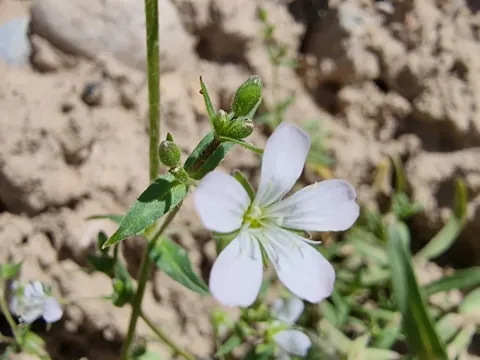
Lepyrodiclis
Lepyrodiclis
Lepyrodiclis is a genus of flowering plants belonging to the Caryophyllaceae (pink) family. In agronomy, it is often classified as a weed that interferes with the growth of essential field crops by competing for resources.
What the section contains

Lepyrodiclis
The life cycle begins in early spring when soil temperatures reach the threshold of 8–10 degrees Celsius, triggering germination. This timing often aligns with the planting season of major cereal crops, making it a persistent nuisance.
The seeds of Lepyrodiclis are remarkably hardy, capable of remaining dormant in the soil for multiple seasons. This adaptation allows the plant to reappear in fields even after years of diligent cultivation and weed management efforts.
Upon germination, the plant focuses on rapid vegetative growth. Its ability to spread quickly allows it to establish dominance in a field, especially in gaps where the primary crop has failed or been planted sparsely.
Understanding the biological cycle of Lepyrodiclis is essential for effective farm management. Early intervention during the seedling stage is critical to preventing the plant from reaching its full reproductive potential.
This plant thrives in fertile, well-drained soils, showing a preference for loamy compositions. Rich nitrogen content in the soil significantly accelerates the development of its root system and general biomass.
Moisture availability is a vital factor for the plant's health. While Lepyrodiclis displays moderate tolerance to dryness, it achieves its most aggressive growth in environments with consistent seasonal rainfall or adequate irrigation.
As a light-loving species, it performs best in open field conditions. It is frequently found along field margins or in areas with high light penetration, where it can photosynthesize without the interference of taller crop canopies.
Soil structure significantly impacts the prevalence of this species. Tilled soils, which provide ideal aeration and moisture retention, create perfect conditions for the seeds to germinate and the roots to anchor firmly.
Control strategies involve consistent soil management, including deep plowing and timely cultivation. These methods disrupt the plant's life cycle and help exhaust the seed bank accumulated in the upper soil layers over time.
Lepyrodiclis is susceptible to fungal infections such as rust and powdery mildew. These diseases can easily jump from the weed to adjacent commercial crops, necessitating careful observation and control measures.
Insect pests, including various aphids and nematodes, often colonize the plant. These pests not only weaken the weed but also serve as a vector for viruses and secondary diseases within the cultivated field environment.
Nematode infestations in the root system are particularly concerning for farmers. These organisms can persist in the soil even after the weed is removed, posing a hidden danger to future planting cycles.
Effective management requires a multi-pronged approach that includes the use of selective herbicides and strict adherence to crop rotation principles to break the cycle of pest and disease proliferation.
- Regular inspection of field edges
- Implementation of integrated pest management
- Selective herbicide application
- Strategic crop rotation to minimize weed growth