
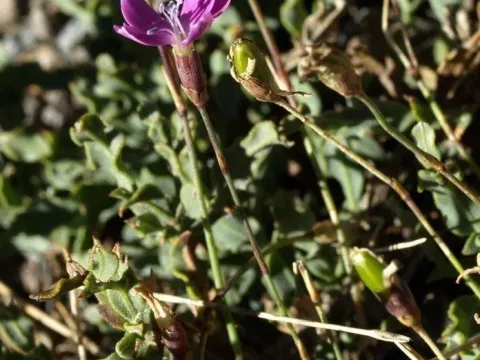
Lange's Pink
Dianthus langeanus
Lange's Pink (Dianthus langeanus) belongs to the Caryophyllaceae family. It is a perennial herbaceous plant native to the Iberian Peninsula, primarily inhabiting the mountainous regions of Spain and Portugal.
What the section contains
Lange's Pink
The plant exhibits a xerophytic nature, having adapted to harsh mountain environments. It thrives in open, sunny locations with direct sunlight exposure, as insufficient light negatively impacts the plant's ornamental density and vigor.
For optimal growth, the species requires light, stony, or sandy soils with a neutral or slightly alkaline pH. Drainage is a critical factor; moisture stagnation in the root zone is strictly prohibited, as it leads to rapid crown rot.
Climatic requirements include moderate air humidity and excellent substrate permeability. The plant possesses high frost resistance, typical of high-altitude species, allowing it to survive significant temperature fluctuations throughout the year.
The primary agricultural and horticultural use of Dianthus langeanus is in decorative landscaping. It is frequently utilized for rock gardens, alpine screes, and sustainable design compositions that mimic natural montane ecosystems.
The main threats to this culture are associated with poor moisture management. Overwatering or planting in heavy, clay-based soils often triggers the onset of root rots and fungal infections, such as Fusarium wilt.
High levels of ambient humidity can lead to the development of various leaf spots and rust diseases. Prophylactic measures include ensuring proper air circulation and avoiding overcrowded plantings to maintain dry foliage conditions.
Among pests, spider mites and aphids pose the greatest threat, often attacking tender new growth during dry, warm spells. Regular monitoring and the application of appropriate insecticides upon early detection are highly recommended.
Nematodes may also damage the root system, severely compromising the plant's overall vitality. Using high-quality, sterilized growing media during the nursery stage is a critical preventive measure.
Slugs and snails can damage basal leaves during wet weather. Cultural practices such as regular soil cultivation and mulching with fine gravel are effective ways to restrict pest access to the foliage.