
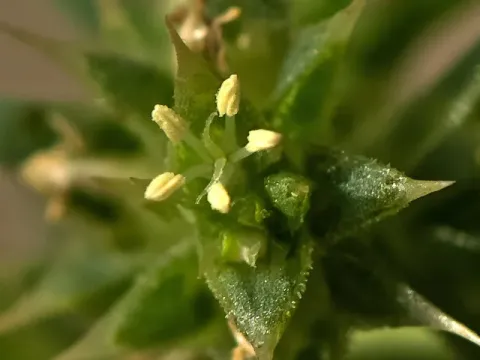
Herniaria latifolia
Herniaria latifolia
Sowing of Herniaria latifolia seeds in a commercial setting is typically carried out in early spring, as soon as soil temperatures reach 5–8 degrees Celsius.
What the section contains
Herniaria latifolia
Late autumn sowing is also viable, as it facilitates natural seed stratification, leading to more uniform germination at the start of the following season.
Since the seeds are extremely small, they should be sown at a shallow depth, no more than 0.5–1 cm, and lightly covered with loose soil or humus.
For optimal crop development, sowings should be spaced with row intervals of approximately 20–30 cm to allow the plants sufficient space to spread.
After emergence, the crop should be thinned to a spacing of 10–15 cm within the rows to prevent overcrowding and ensure adequate airflow.
Herniaria latifolia is a member of the Caryophyllaceae family and is recognized as a perennial herbaceous plant with prostrate, creeping stems.
The crop prefers sunny, open locations with light, sandy or sandy-loam soils that offer excellent drainage to prevent root moisture accumulation.
While the plant exhibits high drought tolerance, moderate irrigation during the active growth phase is required to produce high-quality biomass.
The ideal soil pH for successful cultivation is in the slightly acidic to neutral range, consistent with the plant's natural habitat preferences.
Minimizing weed competition is crucial, as the rupturewort grows slowly during its first year and can be easily outcompeted by more aggressive plant species.
The yield of raw material depends heavily on seeding density and adherence to irrigation schedules during the first half of the vegetative cycle.
Under commercial cultivation conditions, the output of dried herbal material can range from 1.5 to 3 quintals per hectare depending on seasonal factors.
Peak productivity is generally observed in the second year of growth, once the plant has established a robust root system and dense, sprawling foliage.
Economic utility of the crop centers on the harvest of the aerial parts, which are utilized for their diuretic and anti-inflammatory properties in pharmacology.
Proper drying of the raw material in shaded, well-ventilated areas ensures the preservation of vital saponins and flavonoids that define the product's quality.
Due to its specific chemical composition, Herniaria latifolia is relatively resistant to many common agricultural pests and diseases.
However, excessive soil moisture and poor drainage can lead to root rot, which poses a significant threat to the survival of the plantation patches.
High humidity combined with stagnant air can promote fungal infections, which manifest as discoloration or spotting on the leaf surfaces.
Pests such as spider mites may become problematic during prolonged periods of drought, when the plant is stressed and its defensive mechanisms are weakened.
Disease prevention relies on sound agronomic practices: avoiding waterlogging and regularly cultivating the inter-row spaces to ensure soil aeration.
Harvesting should be performed during the peak flowering period, as this is when the concentration of bioactive compounds in the plant tissue is highest.
The aerial portions should be cut with sharp implements, ensuring the root system remains undisturbed to allow for potential regrowth of the plants.
The collected raw material must be transported to the drying facility immediately to prevent heating or fermentation of the mass, which lowers quality.
After cleaning debris and soil particles, the material is dried at temperatures not exceeding 40–45 degrees Celsius in specialized driers or shaded natural conditions.
The finished product should retain a specific herbal aroma, and the shoots should maintain a greenish-yellow hue, confirming high-quality processing.