
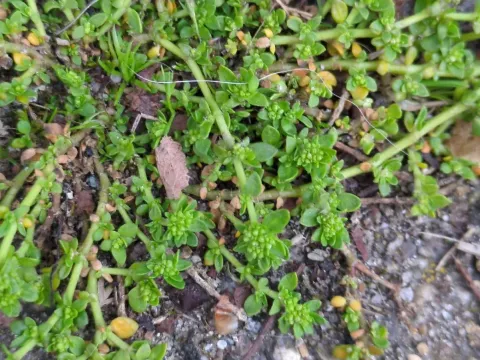
Herniaria
Herniaria L.
Herniaria is primarily propagated via seeds, which demonstrate excellent germination rates when planted under proper environmental conditions.
What the section contains

Herniaria
Sowing should ideally occur in late autumn or early spring, as soon as the soil reaches a temperature of at least 5–8 degrees Celsius.
Since the seeds of this plant are extremely small, they require shallow sowing at a depth of no more than 0.5 to 1 centimeter.
To achieve uniform distribution across the field, it is recommended to mix the seeds with a carrier like dry sand before manual or mechanical sowing.
Post-sowing, the soil surface should be lightly rolled to ensure optimal contact between the seeds and the soil, promoting faster and more uniform emergence.
Herniaria is a member of the Caryophyllaceae family and is known for its hardiness as a low-growing, spreading ground cover plant.
The plant thrives best in sunny, open locations, as shade significantly slows down vegetative growth and reduces the quality of the medicinal harvest.
Ideal soil conditions consist of light, well-draining sandy or loamy soils with a neutral pH, which prevent waterlogging and root rot.
Thanks to its robust taproot system, the crop exhibits high drought resistance, making it suitable for regions with limited rainfall or irrigation.
Proper field management includes maintaining a clean seedbed free of aggressive weeds, which are the main competitors for this low-growing crop.
The commercial yield of Herniaria is determined by the harvest timing, which must coincide with the peak blooming period to ensure maximum chemical efficacy.
With careful field maintenance and regular weeding, growers can achieve two harvest cycles per season in regions with a long growing period.
An average yield of high-quality dry mass ranges from 1000 to 1500 kilograms per hectare depending on soil fertility and plant density.
Economic success depends on the concentration of bioactive compounds such as saponins and flavonoids, which are strictly monitored during post-harvest analysis.
Proper nutrient management, including light fertilization in early spring, can significantly boost the overall vegetative production of the plantation.
Herniaria is naturally resistant to many pests due to the presence of specific bioactive compounds, though young seedlings remain vulnerable.
Root rot is the primary threat to the crop, occurring almost exclusively in poorly drained or overly compacted soils during wet weather conditions.
Powdery mildew can sometimes occur in dense plantings with poor air circulation, necessitating strategic spacing between rows to improve ventilation.
Invasive weeds represent the most significant agricultural challenge, as they can quickly suppress the growth of this low-stature crop if left unchecked.
Preventative crop rotation is highly advised to minimize the risk of soil-borne pathogens accumulating in the field over consecutive growing seasons.
Harvesting is performed during the peak flowering stage when the herb is fully developed and the concentration of medicinal compounds is optimal.
The plants are typically mowed using specialized equipment at a height of 3–5 centimeters above the ground to avoid soil contamination of the product.
Rapid transportation to the drying facility is essential to prevent self-heating and degradation of the volatile compounds within the freshly cut green mass.
Drying must be conducted in well-ventilated, shaded areas at temperatures not exceeding 45 degrees Celsius to maintain the desired color and medicinal quality.
Final storage requires cool, dry, and dark conditions to protect the dried material from moisture absorption and oxidation of the active components.