
Honckenya
Honckenya
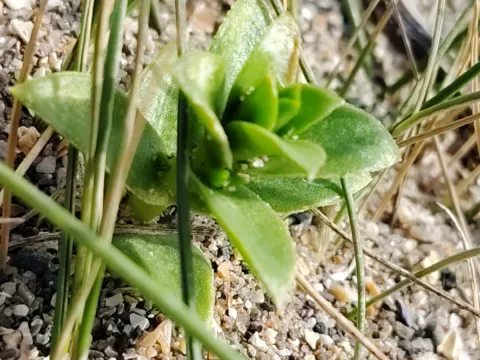
Honckenya (Honckenya peploides) is a perennial succulent plant belonging to the Caryophyllaceae family. It is a well-known halophyte that naturally thrives in the harsh, saline, and windy conditions of sandy seashores across the Northern Hemisphere.
What the section contains

Honckenya
From an agronomic perspective, Honckenya is a highly specialized crop capable of thriving in environments where conventional agricultural species fail. Its unique physiological mechanisms allow it to sequester salt and maintain osmotic balance in saline soils.
Successful cultivation requires sandy, well-drained substrates. The plant is highly sensitive to waterlogging, as its roots require significant aeration. Therefore, selecting appropriate sites with excellent drainage is crucial for plant development.
The plant requires full sun exposure and is remarkably hardy, surviving freezing temperatures in arctic and temperate maritime climates. It is an excellent candidate for the reclamation of coastal lands and for sustainable farming in saline-impacted agricultural zones.
In managed systems, soil salinity must be monitored. While Honckenya is salt-tolerant, optimal growth is achieved when the soil chemistry mimics its native sandy dune environment, ensuring the availability of necessary minerals for its succulent tissues.
The primary agricultural interest in Honckenya lies in its edible, succulent foliage, which is harvested for culinary purposes. The leaves are known for their distinct cucumber-like flavor and salty, briny undertones.
Harvesting is typically performed during the peak of the growing season. The goal is to collect tender young shoots before the plant enters its reproductive stage, which can lead to increased fiber content and tougher textures in the leaves.
Post-harvest management involves rapid cooling or immediate processing. Traditional methods often include fermentation, which enhances the flavor profile and shelf-life of the product, making it a valuable specialty ingredient.
Mechanization in harvesting is possible when the plant is grown in structured row systems. This increases the efficiency of leaf production, moving beyond the limitations of foraging for wild, naturally occurring populations.
Given its nutritional profile, there is growing interest in utilizing Honckenya as a functional food. Ongoing research focuses on maximizing the yield of antioxidants and mineral compounds under controlled cultivation conditions.