
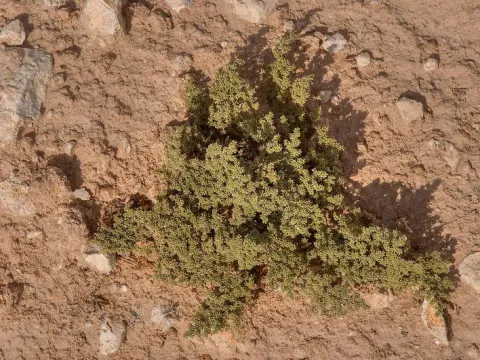
Herniaria hemistemon
Herniaria hemistemon
Herniaria hemistemon belongs to the Caryophyllaceae family and is recognized as a hardy, low-growing perennial. It is primarily native to arid and semi-arid zones across North Africa and Western Asia, where it survives in harsh environmental conditions.
What the section contains
Herniaria hemistemon
Botanically, the plant is characterized by its prostrate, branching stems that form compact mats. The leaves are small and sessile, often exhibiting a subtle grey-green color. Its flowers are inconspicuous, clustered in small groups, which is a hallmark trait of the Herniaria genus.
The plant thrives in well-drained, sandy, or rocky soils. It is notably tolerant of alkaline conditions and low soil fertility, making it an excellent candidate for cultivation in marginal lands where traditional crops struggle to establish.
Cultivation practices for this species focus on minimizing disturbance. Full sun exposure is essential for maintaining the chemical profile of the plant. Irrigation should be restricted to periods of extreme drought, as the plant is highly adapted to water-scarce environments.
Economically, this species is highly valued for its medicinal properties. It is often harvested for its secondary metabolites, including saponins, which are utilized in various pharmaceutical formulations intended for renal and urinary health support.
The primary threat to Herniaria hemistemon is fungal infection, particularly root rot, caused by waterlogged soil conditions. Ensuring adequate soil drainage and proper spacing between plants is crucial for preventing disease outbreaks.
Pests are generally less of an issue for this robust species, though aphids may occasionally colonize the soft tissue of new shoots. Integrated pest management strategies should prioritize natural predators and environmentally friendly deterrents to preserve the quality of the raw medicinal material.