
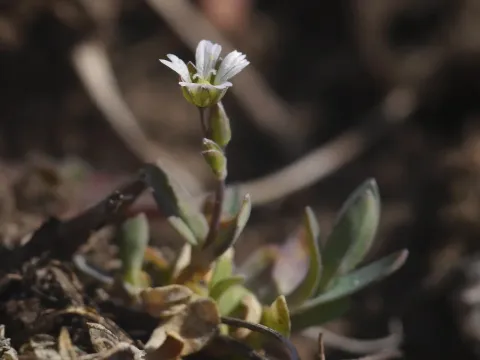
Holosteum
Holosteum
Holosteum, commonly known as jagged chickweed, is an annual flowering plant belonging to the Caryophyllaceae family. It is widely recognized in agronomy as a weed species.
What the section contains

Holosteum
The plant typically germinates in the autumn or early spring, taking advantage of cool temperatures and moisture to establish its root system before competition intensifies.
Its life cycle is remarkably efficient, allowing the weed to produce a significant amount of seeds within a short growth period, which facilitates rapid colonization.
Reproduction is strictly by seed, which can persist in the soil seed bank for extended periods, presenting challenges for long-term field management programs.
Due to its early emergence, it competes directly with winter cereals, potentially reducing yield if not properly controlled in the early spring months.
Holosteum thrives in open habitats, including disturbed soils, agricultural fields, and along field margins, showing high adaptability to varying conditions.
It prefers temperate climates with moderate rainfall, though it can survive on various soil types, from sandy loams to heavier clay-based soils.
Soil fertility impacts the density of infestation; fields with high nitrogen levels often see more vigorous growth of these weeds if the canopy is not closed.
It requires sunlight for optimal growth and struggles in deeply shaded areas, which is why it is most problematic in thin or poorly established crop stands.
Proper field maintenance, including crop rotation and competitive sowing densities, helps minimize the prevalence of Holosteum in commercial production.
As a weed, Holosteum acts as an alternative host for several pests and diseases that affect essential crops like wheat, barley, and various vegetables.
Pests such as aphids often utilize the weed as a shelter, enabling them to survive and migrate to vulnerable crops during the early growing season.
Pathogens hosted by the plant can include various fungi, which may lead to secondary infections in neighboring crops if the weed is not managed in time.
Integrated weed management, combining mechanical tillage and selective herbicide applications, is the most effective approach to reducing its impact.
Maintaining clean field borders and headlands is crucial for preventing the spread of Holosteum seeds into the main production areas of the farm.