
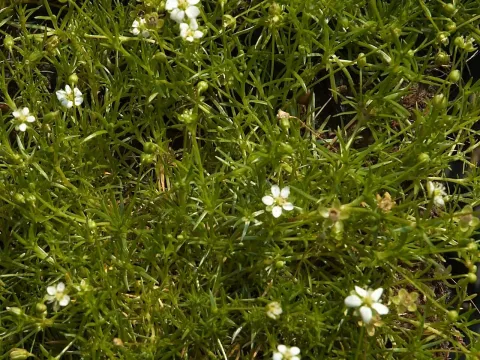
Heath pearlwort
Sagina sabuletorum
Heath pearlwort, a member of the Caryophyllaceae family, can be propagated through seeds or vegetative division. Seeds should be sown in early spring when the soil temperature has reached a stable level suitable for germination.
What the section contains
Heath pearlwort
For container-grown plants, sow seeds in late winter using a light, well-draining substrate. Because the seeds are tiny, cover them very thinly with sand, as they require adequate light to initiate the germination process.
Maintain consistent moisture and a temperature range of 18-20 degrees Celsius. Once the seedlings have reached a sufficient size, they can be hardened off and transplanted into the permanent site in late spring.
Vegetative division is widely preferred for establishing dense groundcover quickly. The best time for this operation is early spring or autumn, when the soil is cool and moist.
Planting density should be kept around 10-15 cm apart. This spacing provides enough room for the root system to spread while ensuring the foliage fills the gaps within one growing season.
The culture thrives in well-drained, sandy, or stony soils, reflecting its natural habitat. Good drainage is essential, as the plant is highly sensitive to waterlogged conditions that can cause root rot.
Full sun is required for optimal performance and to maintain the characteristic compact, cushion-like habit of the plant. While it can tolerate partial shade, too little light may result in thin, elongated stems.
Soil pH should ideally be neutral to slightly acidic. It is crucial to prepare the planting area by removing all perennial weeds, as the plant has a slow initial growth rate and struggles to compete with aggressive species.
This species is notably winter-hardy. In regions with extremely low temperatures and no snow cover, applying a light organic mulch or evergreen boughs helps protect the root zone from excessive freezing and thawing.
While established plants are somewhat drought-tolerant, regular irrigation is recommended during the first growing season. Consistent soil moisture ensures the vibrant green color and structural integrity of the mats.
Root rot is the most significant threat, typically triggered by poor drainage or overwatering. If affected, it is necessary to improve soil drainage and reduce irrigation frequency immediately.
Powdery mildew can affect the foliage in areas with poor airflow and high humidity. Proper spacing during the initial planting phase helps prevent this issue by promoting better circulation around the foliage.
Pests such as aphids may attack the succulent parts of the plant during periods of rapid growth. Targeted insecticidal soap sprays are generally effective for controlling these infestations without damaging the plants.
Slugs and snails can cause significant aesthetic damage in damp weather. Using manual collection techniques or setting up physical barriers is recommended to protect the pearlwort mats from these mollusks.
Overall plant health depends on minimizing stress. Proper drainage, good airflow, and timely removal of dead debris significantly reduce the likelihood of disease outbreaks in pearlwort patches.