
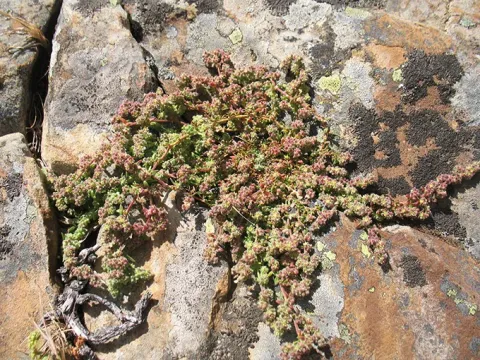
Herniaria regnieri
Herniaria regnieri
Sowing of Herniaria regnieri should be conducted in early spring once the soil temperature consistently reaches 10-12 degrees Celsius to ensure vigorous germination.
What the section contains
Herniaria regnieri
The seeds require a shallow planting depth of no more than 0.5 to 1 centimeter. Proper soil-to-seed contact is essential to prevent drying out during the initial germination phase.
In large-scale production, row seeding is preferred with inter-row spacing of 25-30 centimeters, which allows for mechanical weed control during the early development stages.
Winter sowing is also a viable option in milder climates, allowing for early spring growth and better establishment of the root system before the onset of summer heat.
To ensure uniform coverage, growers often mix the tiny seeds with fine sand. This practice helps to achieve a balanced plant density across the entire field.
Herniaria regnieri is a member of the Caryophyllaceae family, well-adapted to arid environments and characterized by its compact, mat-forming growth habit.
The plant thrives in full sun conditions. While it is highly adaptable, it requires excellent soil drainage to prevent root rot, which is its primary environmental vulnerability.
It prefers sandy, rocky, or gravelly soils with a neutral pH level. Its ability to extract nutrients from poor, rocky substrates makes it an excellent choice for low-input agriculture.
Water requirements for this culture are low once the plant is established. Supplemental irrigation is only necessary during prolonged drought periods in the first year of growth.
The plant is highly frost-tolerant, making it suitable for temperate regions. It can survive harsh winters provided that the soil is not waterlogged during the dormant period.
Harvesting should be timed to coincide with the peak flowering phase. This is the stage when the concentration of medicinally active compounds in the biomass is at its absolute peak.
The biomass is harvested by mechanical mowing at a height of approximately 3-5 centimeters above ground level, ensuring that the basal part of the plant remains intact for regrowth.
Immediate processing after mowing is critical. The cut herb must be moved to a clean, shaded area to begin the drying process and prevent heat-related quality degradation.
Drying is performed in well-ventilated sheds or controlled drying rooms at temperatures not exceeding 40 degrees Celsius to maintain the integrity of the plant's essential oils.
- Regular harvesting encourages bushier growth and thicker coverage.
- The harvested material should be packed in breathable containers for long-term storage.