
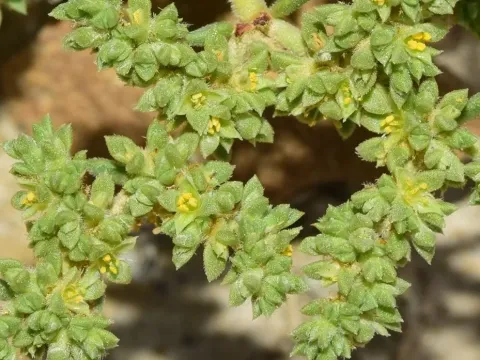
Herniaria fontanesii
Herniaria fontanesii
Herniaria fontanesii is a perennial herbaceous plant belonging to the Caryophyllaceae family. It is recognized for its prostrate growth habit, forming dense, low-lying mats that effectively cover the soil surface.
What the section contains
Herniaria fontanesii
The plant is native to the Mediterranean region and North Africa, where it thrives in arid and semi-arid environments. It is well-adapted to poor, rocky, and sandy substrates that characterize its natural habitat.
Cultivation of this species requires well-drained, sandy, or stony soils with a neutral to slightly alkaline pH. Excessive moisture is detrimental, so location selection must prioritize areas where water does not accumulate.
Herniaria fontanesii displays exceptional tolerance to high temperatures and prolonged dry periods, making it a reliable choice for xeriscaping or specialized agricultural uses in dry regions.
Standard agronomic practices include preparing the seedbed to be fine-textured and weed-free. Once established, the plants require minimal maintenance, as they are capable of suppressing competing vegetation due to their dense, carpet-like growth.
Root rot, induced by waterlogging or poor drainage, is the primary threat to the health of Herniaria fontanesii. Ensuring proper soil aeration is the most effective preventative measure against these infections.
Pests such as spider mites and aphids may appear during hot, dry summer months. Monitoring the foliage density is essential to ensure that localized outbreaks do not spread across the plantation.
Powdery mildew can occur if the plants are spaced too closely, which prevents proper airflow. Providing enough space between individual plants significantly reduces the risk of fungal pathogens.
Integrated pest management should focus on biological control agents. Given the use of this plant in medicinal contexts, avoiding broad-spectrum synthetic pesticides is highly recommended.
Regular monitoring and thinning of overcrowded areas are vital components of maintaining a healthy crop. Good sanitation practices, such as removing debris, further minimize the risk of environmental stress.