
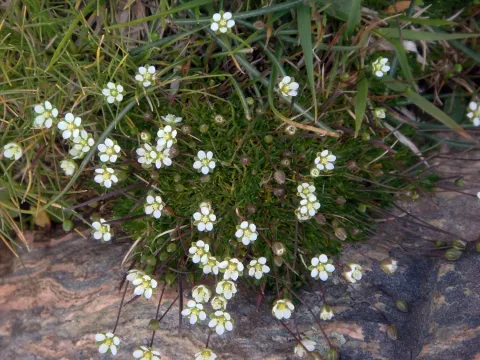
Heath pearlwort
Sagina pilifera
Heath pearlwort (Sagina subulata), a member of the Caryophyllaceae family, is a versatile ground-covering plant. It is primarily propagated by seeds or by dividing established clumps in early spring.
What the section contains
Heath pearlwort
When starting from seeds, surface sow them indoors in late winter or early spring. Do not cover the seeds with soil, as they require light to germinate effectively.
Keep the substrate consistently moist and maintain a temperature range between 18-20 degrees Celsius. Seedlings will emerge within two to three weeks under proper conditions.
Transplanting into the garden bed should occur after the danger of frost has passed. Planting density varies, but typically 10-15 cm spacing is sufficient for full coverage within one season.
Division of older plants is the most reliable propagation method. Separate the dense mats into smaller clumps and replant them immediately into pre-moistened soil.
This plant thrives in full sun but appreciates some afternoon shade in hotter climates. It is highly valued for its ability to form a dense, moss-like carpet.
The ideal soil is sandy, gritty, and well-drained. Drainage is critical; Sagina subulata will not survive in waterlogged conditions, which lead to root and crown rot.
Watering requirements are moderate but strict. The soil must remain slightly moist throughout the growing season to ensure the lush green appearance of the carpet.
Climatic requirements are broad, as the plant is hardy in most temperate regions. It can withstand cooler temperatures but requires protection from severe desiccating winds.
Maintenance involves removing invasive weeds manually. Since the plant forms a very tight mat, mature stands are quite effective at suppressing weed growth on their own.
Root rot caused by poorly drained soil is the most frequent issue. It manifests as brown patches in the middle of the lush, green ornamental carpet.
Slugs and snails are the primary pests that damage the succulent leaves of the plant. They are especially problematic during periods of high humidity and rainfall.
Fungal infections, including mild cases of powdery mildew, can occur if the plant is grown in areas with low airflow and high humidity during the summer months.
Preventative measures include avoiding overhead watering during the evening to keep the foliage dry overnight, which significantly reduces the risk of fungal spread.
Using crushed shells or copper barriers around the perimeter of the planting area can effectively deter slugs from accessing the delicate foliage of the pearlwort.