
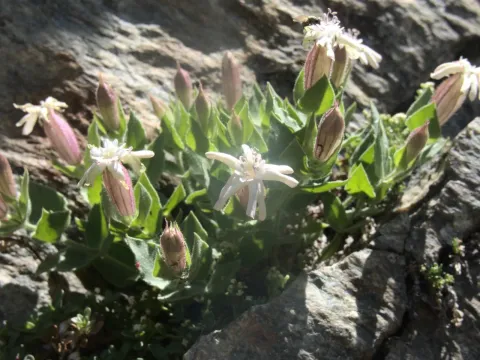
Heartleaf catchfly
Silene cordifolia
The heartleaf catchfly (Silene cordifolia) is a herbaceous perennial plant belonging to the Caryophyllaceae family. It is recognized for its unique heart-shaped foliage and high environmental adaptability.
What the section contains
Heartleaf catchfly
Morphologically, the plant develops sturdy stems covered in fine trichomes, which serve as a protective mechanism against excessive transpiration in arid conditions. It maintains a stable, compact growth habit.
The crop thrives in well-drained, porous soils with a neutral pH level. It is essential to avoid poorly draining, heavy soils, as the root system is sensitive to waterlogging, which often results in root rot.
Regarding climate, the plant exhibits high tolerance to temperature fluctuations and moderate cold. It prefers open, sunny locations but can successfully tolerate partial shade during intense afternoon hours.
Agronomic management requires minimal irrigation, as the plant is naturally drought-tolerant. Excessive moisture in the crown area should be avoided to prevent fungal infections and maintain plant vigor.
Direct sowing into open ground is recommended when soil temperatures consistently reach 10–12°C. Seeds should be planted at a shallow depth of 1–2 cm to ensure optimal germination rates.
For large-scale cultivation, precision seeding is preferred to maintain consistent spacing between rows. A distance of 30–40 cm between plants is usually sufficient for optimal air circulation.
Greenhouse propagation via seeds in early spring allows for earlier establishment in the field. Seedlings should be hardened off before being transplanted into their permanent growing site.
Vegetative propagation by division is an effective method for maintaining uniform plant traits. This should be performed during the plant's dormant phase, either in early spring or late autumn.
Ensuring the seedbed is free of debris and weeds is crucial for seedling survival. Shallow cultivation after sowing can help manage weed pressure without disturbing the developing root systems.
The primary threat to Silene cordifolia is fungal pathogens caused by high humidity and poor ventilation. Powdery mildew is common in stagnant air conditions, requiring immediate thinning of planting density.
Insect pests, such as aphids and spider mites, may infest the plants during periods of prolonged drought. Monitoring the undersides of the leaves for early signs of infestation is a critical control measure.
Root diseases, specifically those caused by Pythium and Phytophthora, are major risks in poorly drained soils. Improving soil structure and managing drainage are the best prevention strategies.
Weed competition during the establishment phase can significantly reduce growth rates. Integrated weed management is recommended to keep the area clean during the first months of growth.
Using certified, disease-free seeds or healthy divisions is the first step in maintaining a healthy crop. Rotating the growing site every few years prevents the accumulation of soil-borne pathogens.