
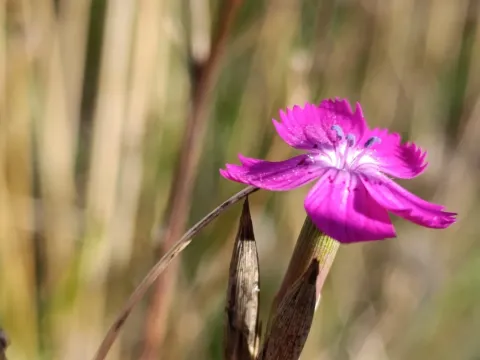
Dianthus scaber
Dianthus scaber
Sowing Dianthus scaber seeds is best performed in late March or early April in seed trays. This early start ensures that the seedlings have enough time to establish a robust root system before the warmer weather arrives.
What the section contains
Dianthus scaber
Direct seeding into the open field is feasible once soil temperatures reach 15-18 degrees Celsius. Seeds should be sown lightly, covering them with no more than 0.5 to 1 cm of soil to ensure adequate light exposure for germination.
Optimal germination occurs at 20 degrees Celsius. Seedlings typically emerge within 10 to 14 days, provided that the substrate is kept consistently moist but not waterlogged.
Pricking out the seedlings into individual pots is recommended once the first pair of true leaves appears. This step prevents overcrowding and fosters stronger individual plant development.
Transplanting the hardened seedlings to their permanent location is typically done in late May. Spacing should be approximately 20 by 20 centimeters to allow for optimal air circulation between mature plants.
As a member of the Caryophyllaceae family, Dianthus scaber is a sunlight-demanding crop. It thrives in open, sunny environments and does not perform well when exposed to shade or crowded conditions.
The species requires well-drained, light, and airy soil with a neutral or slightly alkaline pH. Heavy, clay-rich soils are unsuitable as they promote root rot, which is the most common cause of crop failure.
Although it exhibits good drought tolerance, Dianthus scaber benefits from regular, moderate watering during the peak growing season to ensure prolific flowering and healthy foliage.
Fertilization should be managed carefully; excess nitrogen encourages excessive vegetative growth while suppressing flower production. Balanced fertilizers rich in phosphorus and potassium are preferred.
The plant is highly winter-hardy. However, in regions with severe winters and no snow cover, applying a light layer of mulch around the base of the plant can provide essential protection against frost damage.
Fusarium wilt represents the most significant threat to Dianthus scaber populations. This fungal disease attacks the vascular system of the plant, often leading to rapid wilting and eventual death of the stems.
Rust and alternaria leaf spot can also affect the foliage, particularly in humid or poorly ventilated conditions. Prevention focuses on maintaining clean planting sites and proper plant spacing.
Spider mites are common pests that thrive in dry environments. They infest the leaves, causing them to yellow and lose their vitality; therefore, moisture management is a key control strategy.
Thrips and aphids can damage developing buds, leading to deformed flowers. Integrated pest management, including the use of systemic insecticides when necessary, helps maintain plant quality.
Effective management includes clearing away old plant material at the end of the season to reduce the risk of pathogen overwintering and reinfection in the following spring.
The primary use of Dianthus scaber is ornamental. Harvesting stems for cut flower production is ideally performed in the early morning when the buds have fully colored but have not yet opened.
Professional harvesting techniques involve using disinfected shears and cutting stems at a length that preserves enough foliage for the plant to recover and prepare for future flowering cycles.
Seed harvesting is conducted once the capsules turn brown and dry. Careful timing is necessary to capture the seeds before the capsules burst and disperse them naturally.
Once harvested, seeds should be thoroughly cleaned and stored in a cool, dry place to maintain viability for the following planting season.
With optimal maintenance, a well-established crop can produce a significant yield of flower stems per square meter, making it a viable option for professional floriculture and landscape design.