
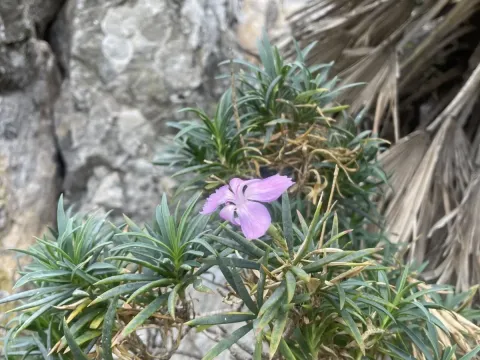
Dianthus rupicola
Dianthus rupicola
Dianthus rupicola is typically propagated by seeds sown in early spring in well-drained seedling trays. Cold stratification for a few weeks before sowing can significantly enhance the germination rate of this species.
What the section contains
Dianthus rupicola
The growing medium must be highly porous, consisting of a mix of sand and peat-free compost. Seeds should be sown on the surface and lightly covered with fine grit to ensure stability and proper moisture levels.
Optimal germination occurs at temperatures between 18 and 22 degrees Celsius. Maintaining consistent but moderate moisture is essential during the initial growth stage to avoid rot.
Seedlings should be pricked out into small pots once they develop their first set of true leaves. This allows the root system to strengthen before transplanting into the garden.
Transplanting to the final location should occur after the last frost of the season. A sunny location with excellent drainage is crucial for the establishment of young plants.
Dianthus rupicola, belonging to the Caryophyllaceae family, is a perennial plant naturally adapted to limestone cliffs and rocky environments. Its biological structure is designed to survive in nutrient-poor but well-drained soils.
Full sun is a strict requirement for this species. In shaded conditions, the plant loses its dense, cushion-like habit, stems become etiolated, and the flowering display is drastically reduced.
The plant thrives in alkaline or neutral soils that are coarse in texture. It is highly intolerant of waterlogged conditions, which frequently lead to crown rot and premature plant death.
It exhibits remarkable drought tolerance once established. Its deep root system allows it to access moisture trapped in rock crevices, making it an excellent choice for xeriscaping or rock gardens.
Winter hardiness is reliable as long as the drainage remains effective. Applying a layer of granite chippings around the base of the plant protects the crown from moisture and potential fungal decay.
Fungal pathogens, particularly Fusarium and Alternaria, pose the most significant threat to Dianthus rupicola, especially in high-humidity or poorly ventilated conditions.
Pests such as aphids and spider mites may target the tender foliage during dry spells. Early intervention with insecticidal soaps is recommended to prevent large-scale infestations.
- Monitor plants weekly for signs of yellowing leaves.
- Avoid overhead watering to minimize fungal exposure.
- Ensure adequate spacing to promote airflow.
- Remove and destroy any infected foliage immediately.
Root rot is the most common cause of failure in cultivation. This is almost exclusively linked to overwatering or planting in heavy, clay-based soil that holds excess water.
Chemical control with fungicides is generally not necessary if proper environmental conditions are maintained. Preventive cultural practices remain the best strategy for healthy growth.