
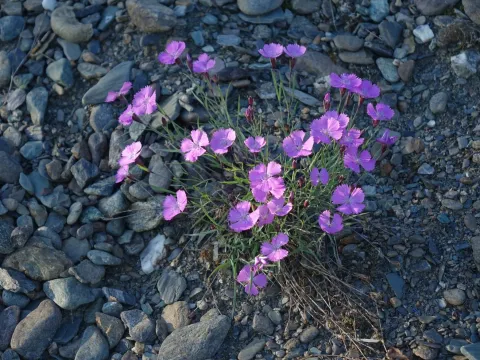
Dianthus repens
Dianthus repens
Sowing seeds of Dianthus repens in open ground is recommended during the spring season when the risk of night frost has completely passed.
What the section contains
Dianthus repens
For container-grown seedlings, start in late winter or early spring using a well-drained, sandy mix to ensure successful germination and root development.
The seeds should be sown thinly and covered lightly with fine grit or sand, as they require a certain amount of light and oxygen to germinate effectively.
Vegetative propagation via cuttings is a common practice, performed during the summer months to produce uniform and healthy new plants.
Spacing is essential, and plants should be positioned 20 to 30 centimeters apart to allow for the natural creeping habit of the species as it matures.
Dianthus repens, belonging to the Caryophyllaceae family, is a perennial plant characterized by its low-growing, mat-forming habit, making it ideal for alpine environments.
The species is naturally found in cold, rocky regions, which accounts for its high resilience and adaptability to various harsh environmental conditions.
It thrives in full sun exposure and requires soil with excellent drainage; heavy, waterlogged soils can lead to rapid root rot and overall plant failure.
The ideal soil pH for this culture is neutral to slightly alkaline, mimicking the rocky, mineral-rich substrates of its native mountain habitats.
Regular maintenance involves light fertilizing with low-nitrogen formulas to promote blooming without causing weak, elongated growth during the peak season.
Fungal infections, such as rust and Fusarium wilt, are significant threats to Dianthus repens, especially in regions with high humidity or poor soil aeration.
Preventative measures include ensuring proper airflow around the base of the plant and avoiding overhead irrigation that leaves the foliage wet for extended periods.
Common pests like aphids and spider mites can infest the foliage during hot, dry weather, potentially weakening the plant and reducing its ornamental value.
Integrated pest management, including regular inspection and the use of targeted horticultural soaps or insecticides, is recommended for healthy crop management.
Proper sanitation, including the removal of dead or decaying plant material from the crown area, significantly reduces the likelihood of disease outbreaks.