
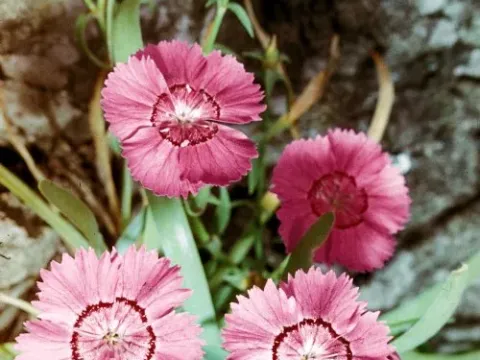
Dianthus raddeanus
Dianthus raddeanus
Seeds of Dianthus raddeanus should be sown in early spring as soon as the soil temperatures reach 10-12 degrees Celsius for optimal germination.
What the section contains
Dianthus raddeanus
Cold stratification of the seeds for three to four weeks before sowing can significantly improve the uniformity of sprout emergence.
Seeds should be sown shallowly, with a covering of no more than 0.5 cm of soil, as light is often beneficial for the initial development of the seedlings.
For indoor propagation, sowing begins in March using a light, well-draining mixture of peat and sand in trays or small pots.
Transplanting seedlings to their final outdoor location is best performed in late May once the threat of killing frosts has fully passed.
Dianthus raddeanus is a perennial herb belonging to the Caryophyllaceae family, naturally occurring in the rocky and mountainous regions of the Caucasus.
This species is highly adapted to full sun exposure and requires open spaces to maintain its compact growth habit and prevent etiolation.
The plant strictly requires well-drained, lime-rich soil, as it is highly susceptible to root rot if moisture remains trapped around the root neck.
Its drought tolerance makes it an excellent candidate for xeriscaping or traditional rock gardens where other delicate plants might fail to survive.
While hardy, providing a light mulch during exceptionally harsh winter conditions can help protect the plant crowns from sudden temperature fluctuations.
The primary threats to this culture are fungal diseases, particularly Fusarium wilt, which are almost always triggered by overwatering or poor drainage.
Leaf rust, characterized by small brown pustules on the foliage, can become a problem in humid or stagnant air environments where airflow is insufficient.
Spider mites are a common pest, particularly during hot and dry summer spells, as they feed on the underside of the leaves, causing chlorosis.
Aphids may occasionally attack the tender flower buds, requiring immediate monitoring and control to prevent the deformation of the blossoms.
Effective management includes maintaining proper spacing between plants and ensuring that the soil surface dries out adequately between waterings.