
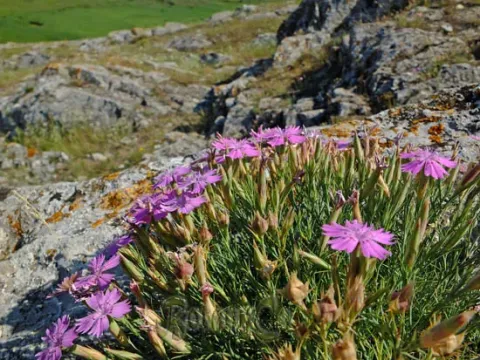
Dianthus nardiformis
Dianthus nardiformis
Dianthus nardiformis is a perennial herbaceous plant belonging to the Caryophyllaceae family. It is recognized for its dense, cushion-forming growth habit, which makes it an excellent choice for rock gardens and alpine-style landscaping.
What the section contains
Dianthus nardiformis
The species is native to the rocky landscapes and steppe regions of Southeast Europe. Its evolutionary history has endowed it with high resistance to both cold temperatures and extreme dry conditions, allowing it to thrive where other plants might struggle.
The plant has specific soil preferences, requiring well-drained, gritty, or sandy soils. It thrives in alkaline or neutral substrates and is highly sensitive to excessive moisture, which can rapidly damage its fine root system.
For optimal health, this plant requires a full sun exposure. Sunlight is essential for maintaining the compact architecture of the plant and for achieving a prolific floral display during the summer months.
Cultivation practices are simple due to the plant's natural hardiness. Minimal maintenance is required, such as weeding the immediate surroundings and ensuring the root zone remains dry during periods of heavy rainfall through proper site selection.
The primary threats to Dianthus nardiformis involve fungal pathogens linked to excessive soil moisture. Root and crown rot are the most frequent issues, often occurring in poorly drained or overly rich soil types.
Pests such as spider mites may become problematic during particularly hot, dry seasons, leading to discoloration and decline of the foliage. Regular inspection of the plant's base and leaves is recommended to prevent significant damage.