
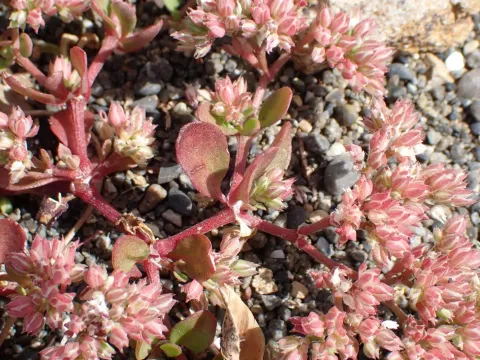
Polycarpon
Polycarpon
Polycarpon (Polycarpon) is a genus belonging to the Caryophyllaceae family. It is typically found in agricultural environments as a weed species, often adapting to disturbed soils and open field spaces.
What the section contains


Polycarpon
The life cycle of the plant is predominantly ephemeral, meaning it can complete its full growth cycle in a short period, especially under favorable moisture and temperature conditions.
In terms of growth timing, germination typically occurs during autumn or spring when temperatures range between 10 and 15 degrees Celsius, allowing the plant to establish before the onset of extreme seasonal conditions.
The plant demonstrates high adaptability in its developmental stages, quickly transitioning to flowering when environmental stressors, such as rising temperatures or drought, occur.
It forms a basal rosette followed by dichotomously branched stems, which is a characteristic feature that aids in the identification of different species within this genus.
Polycarpon thrives in loose, sandy, or well-drained soils. Its preference for lighter soil textures makes it a common inhabitant of coastal or rocky areas and sandy agricultural fields.
The plant is highly resilient to dry conditions, showing xerophytic traits that allow it to persist in habitats where other plants might fail due to water scarcity.
Adequate sunlight is essential for Polycarpon. It does not tolerate shade well, and therefore, it is rarely found in dense forest canopies or areas with heavy vegetative cover.
It has moderate nutrient requirements, though it readily utilizes available nitrogen in cultivated fields, which can lead to rapid expansion across disturbed soil patches.
The species prefers neutral to slightly alkaline soil environments, showing sensitivity to high levels of soil acidity which can limit its growth and germination rates.
The primary threat to the stability of Polycarpon populations is intensive chemical weed management, as it is generally susceptible to most broad-spectrum herbicides used in modern agriculture.
While the plant is not a primary target for major pests, it can be impacted by soil-dwelling insects like wireworms, which target the roots and can cause developmental stunting.
Fungal pathogens are rare but can include opportunistic infections during periods of excessive rainfall and stagnant water, which may cause root or crown rot.
The plant may occasionally serve as an alternative host for viruses that can affect more economically valuable crops, leading to its systematic removal from agricultural land.
Biotic competition from vigorous, fast-growing crop species usually serves as the most effective natural control mechanism against the proliferation of Polycarpon in managed fields.