
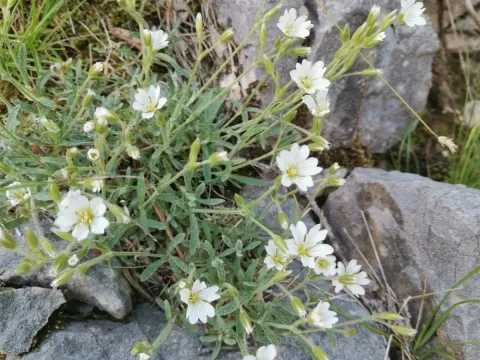
Cerastium decalvans
Cerastium decalvans
Cerastium decalvans belongs to the Caryophyllaceae family and is recognized for its ability to form dense, mat-forming carpets of foliage. It is an excellent choice for ground coverage in rocky or arid garden areas.
What the section contains
Cerastium decalvans
Sowing should ideally occur in early spring when the soil temperature begins to rise. Using a well-draining, sandy-based potting mix is recommended to ensure optimal conditions for seed germination and initial seedling development.
Seeds are quite small and should be placed on the surface of the soil with minimal coverage. Light is often beneficial for the germination of this species, so keeping them barely covered is standard horticultural practice.
Spacing plants approximately 25–30 centimeters apart allows for enough room for expansion while eventually creating a solid layer of greenery. This density helps prevent soil erosion and restricts weed establishment.
Vegetative propagation via cuttings taken in late spring is a preferred method for maintaining uniformity in larger plantings. This ensures the rapid establishment of new areas while preserving the specific botanical traits of the parent plant.
This species thrives in full sun exposure. While it can tolerate light shade, excessive darkness will inevitably lead to leggy growth and a reduction in the silver-toned luster that makes this plant so visually appealing.
Soil requirements are relatively modest, as the plant performs best in lean, well-draining substrates. It is exceptionally well-suited for rock gardens, gravelly soils, and areas with limited nutrient density, where other plants might struggle.
Water management is critical. Once established, Cerastium decalvans is remarkably drought-tolerant. Excessive irrigation, especially when combined with poor drainage, poses a significant risk to the health of the root system.
The plant is highly adaptable to various climatic zones, demonstrating strong winter hardiness. It withstands temperature fluctuations well, making it a reliable perennial choice for northern and temperate gardening zones.
Fertilizer usage should be avoided or strictly limited. Over-fertilization encourages rapid, weak growth which reduces the compactness of the plant and leaves it more susceptible to environmental stress and disease.
The primary concern for this culture is fungal infection triggered by stagnant moisture. Roots and the base of the stems are particularly vulnerable to rot if air circulation is poor or if the soil remains waterlogged.
Powdery mildew is another occasional issue that may occur during periods of high humidity. Improving airflow around the plants by thinning dense areas is a crucial step in managing and preventing this disease.
Aphids can occasionally infest new growth, although they rarely cause systemic damage. Monitoring during the active growth phase and using gentle sprays when necessary is generally sufficient to protect the crop.
Weed control is essential, particularly in the first year of growth. Once the mat becomes fully established, it creates a natural barrier that successfully suppresses the majority of invasive weed species.
Regular maintenance, such as trimming back overgrown areas, keeps the plant looking fresh and encourages new, healthy growth while simultaneously minimizing the potential for pest and disease accumulation.