
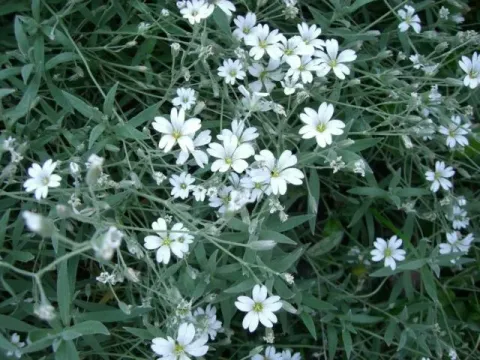
Cerastium caespitosum
Cerastium caespitosum
Cerastium caespitosum, a member of the Caryophyllaceae family, can be propagated through seed sowing or by vegetative division of the root mass.
What the section contains
Cerastium caespitosum
Seeds are typically sown in early spring when the soil has sufficiently warmed, ensuring they are placed on the surface to receive adequate light for germination.
Indoor sowing can be initiated in late winter using trays, maintaining a temperature range between 18 and 20 degrees Celsius for optimal seedling development.
Vegetative propagation is best achieved by dividing established clumps in early autumn, which allows the plant to root before the onset of winter.
When transplanting, spacing the plants about 20–30 centimeters apart is essential to allow them enough room to spread and create a lush carpet effect.
This species thrives in full sun, making it ideal for open garden spaces, rock gardens, or slopes that require effective soil coverage.
It prefers well-draining, light, and sandy soils; therefore, incorporating grit or gravel into the planting medium is highly recommended to prevent waterlogging.
Cerastium caespitosum is highly cold-hardy, easily enduring low winter temperatures provided that the soil drainage remains excellent throughout the year.
Watering should be kept moderate, focusing on dry periods; over-watering is the most frequent mistake leading to root health issues.
Low maintenance is required regarding fertilization, as too much nitrogen often leads to excessive leaf growth at the expense of floral performance.
The primary threat to this plant is fungal disease, particularly when stagnant air and high humidity are present within the dense mats of foliage.
Grey mold is a significant concern that can quickly compromise the plant's health, requiring immediate removal of infected areas and better ventilation.
Root rot is prevalent in poorly drained soils and can quickly cause the death of mature sections of the plant if not addressed early.
Common pests like aphids and spider mites may target the plant during stressed periods, such as intense heat waves or severe drought conditions.
Effective management includes maintaining proper distance between individual plants and applying selective fungicides if infection signs appear.
Seed harvesting should occur once the seed pods turn brown and start to dry out, typically during the peak of the summer season.
Trimming the foliage back after the main bloom is a standard horticultural practice that promotes tighter, denser growth and maintains visual appeal.
As a landscape-focused crop, the harvesting of the biomass is restricted to periodic pruning to keep the area clean and well-maintained.
Vegetative harvesting involves digging up healthy portions of the mat, ensuring that each piece has adequate root structure for rapid establishment.
There is no industrial harvest for this species, so management focuses on long-term health and the preservation of the plant's structural integrity.