
Cerastium dichotomum
Cerastium dichotomum
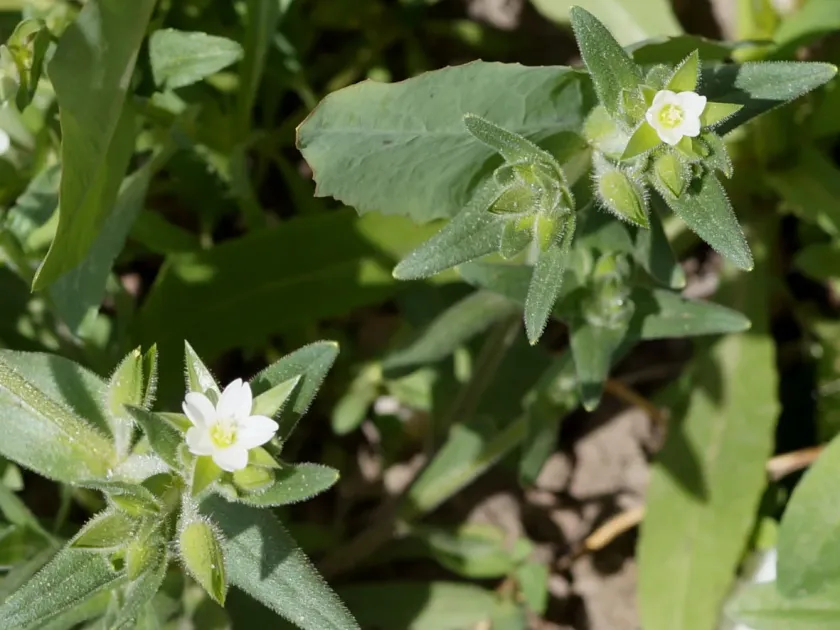
Description
Sowing dates
Cerastium dichotomum, commonly known as the forked mouse-ear, belongs to the Caryophyllaceae family. It is an annual herbaceous plant often found in various pasture ecosystems across Eurasia.
For agricultural cultivation, seeds should be sown in early spring. The ideal soil temperature for germination is between 8 and 10 degrees Celsius, which ensures vigorous early growth before the onset of summer drought.
The sowing rate should be adjusted based on the intended use, typically aiming for 10–15 kilograms per hectare. Proper calibration of seeding equipment is essential to maintain consistent spacing.
Seeds must be placed at a shallow depth, approximately 1–2 centimeters deep. Deeper planting significantly reduces the emergence rate due to the small energy reserve in the seeds.
After seeding, rolling the field helps to improve soil-to-seed contact, facilitating better moisture uptake from the soil layers, which is crucial for successful establishment.
Growing requirements
This crop thrives in well-drained, sandy or light loamy soils. It is highly intolerant of waterlogged conditions, which can lead to rapid root decay and loss of crop stand.
It prefers a sunny environment with full exposure to daylight. While it can adapt to various light conditions, its biomass production is significantly higher in open, unobstructed field environments.
Soil pH should ideally be in the neutral range (6.0–7.5). On highly acidic soils, the nutrient uptake efficiency of the plant decreases, leading to stunted development and yellowing leaves.
Temperature tolerance is moderate; the plant is well-adapted to cool-season growth but tends to enter senescence quickly if subjected to prolonged heat waves exceeding 30 degrees Celsius.
Consistent, moderate moisture is required during the vegetative stage. However, as the plant matures, it shows a remarkable degree of drought tolerance compared to other forage crops.
Main diseases and pests
Fungal pathogens such as powdery mildew are the most common threats to Cerastium dichotomum. These diseases typically emerge during periods of high relative humidity and poor air circulation.
Insect pests include various aphid species that target the succulent new growth. Heavy infestations can weaken the plant and reduce its nutritional value if it is intended for forage.
Root-knot nematodes can also be problematic if the crop is repeatedly sown in the same location without appropriate intervals, leading to localized yield losses.
Integrated Pest Management (IPM) strategies, including crop rotation and the destruction of nearby weed hosts, are the most effective ways to minimize these threats.
Chemical control should be used judiciously, prioritizing selective products that do not damage the sensitive vegetative structures of the plant during the early growth phase.