
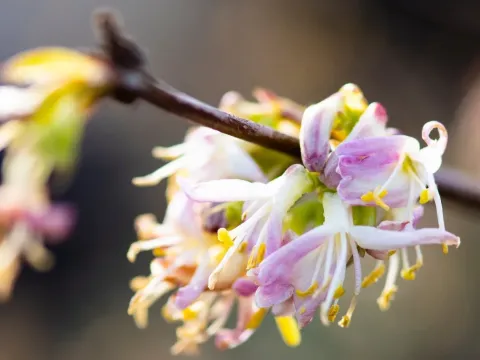
Lilac-flowered honeysuckle
Lonicera syringantha
Lilac-flowered honeysuckle (Lonicera syringantha) is a deciduous shrub belonging to the Caprifoliaceae family. It is native to the high-altitude regions of Western China, where it thrives in rocky terrain and mountain forests.
What the section contains
Lilac-flowered honeysuckle
The plant is characterized by its slender, arching stems and small, lance-shaped, glaucous-green leaves. It is highly valued for its fragrant, lilac-colored flowers that bloom profusely in the spring, adding significant ornamental value to landscapes.
Regarding climatic needs, this species is noted for its excellent cold hardiness. It performs best in temperate zones where it can receive full sun or light shade, provided it is shielded from harsh, drying winds.
Soil requirements for Lonicera syringantha include well-draining, moderately fertile loams. While the shrub is relatively adaptable, it performs poorly in waterlogged soils, which can lead to rapid root degradation.
Agrotechnical care involves consistent mulching to retain soil moisture and annual pruning after flowering to maintain a desired shape. Providing adequate spacing is essential to encourage healthy air circulation around the foliage.
The primary pests affecting this honeysuckle are aphids and leaf-rollers, which typically infest the tender new growth during the spring season. Targeted insecticide applications are effective in managing significant outbreaks.
Powdery mildew is the most common fungal disease, often triggered by high humidity levels or poor spacing that restricts airflow. Maintaining clear foliage and proper hydration helps mitigate the risk of infection.
Leaf spot diseases may occasionally occur, typically appearing during long periods of damp weather. Removing fallen leaves and infected parts of the plant helps to reduce the inoculum load in the garden environment.
Root rot remains a major threat in poorly drained soils. Gardeners must ensure that the planting site has been properly amended to prevent standing water near the base of the shrub during the dormant season.
Sustainable pest management practices, such as encouraging beneficial insects and using horticultural oils, can effectively protect the plant without relying solely on aggressive chemical treatments.