
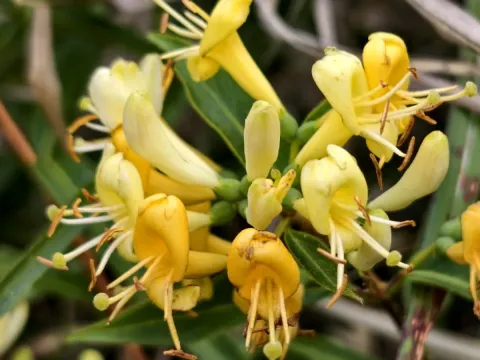
Lonicera alseuosmoides
Lonicera alseuosmoides
Lonicera alseuosmoides is an evergreen or semi-evergreen climbing shrub belonging to the Caprifoliaceae family. Native to the mountainous regions of China, this species thrives in forest environments where it can benefit from partial shade and high levels of atmospheric humidity.
What the section contains
Lonicera alseuosmoides
The plant demands a mild climate and is sensitive to strong, cold winds which can damage its foliage. In cooler zones, it requires a sheltered position against a wall or in a greenhouse to survive the winter. Protection from frost is essential for maintaining its evergreen character throughout the year.
Cultivation requires fertile, well-drained soil with a slightly acidic to neutral pH. Proper soil preparation is crucial as the root system is prone to damage in waterlogged or heavy clay conditions. Incorporating organic matter during planting helps improve drainage and provides necessary nutrients.
Botanically, this shrub is characterized by its coriaceous, elliptical leaves and small, fragrant, tubular flowers. Its vigorous climbing habit makes it an excellent choice for vertical gardening, provided it is supplied with a sturdy trellis or support structure to guide its growth.
Regular horticultural care involves consistent watering during the growing season and the application of mulch around the base to retain moisture. Periodic pruning is necessary to maintain the plant's shape, control its size, and remove any dead or damaged wood to promote vigorous new growth.
Powdery mildew is a common fungal threat for this species, especially when plants are grown in areas with poor airflow and high humidity. Improving air circulation through strategic pruning and thinning the foliage significantly reduces the incidence of fungal outbreaks.
Aphids and scale insects are the primary pests that affect the health of the plant by feeding on the sap of young stems and leaves. Integrated pest management strategies, including the use of horticultural oils and systemic insecticides, are recommended when infestations exceed economic thresholds.
Leaf spots, often caused by pathogenic fungi, can occur during periods of prolonged wet weather. To mitigate this, irrigation should be directed toward the root zone rather than the foliage, and fallen leaves should be cleared to prevent the overwintering of fungal spores.
Chlorosis, manifesting as yellowing of leaves, is frequently linked to nutrient deficiencies or improper soil pH levels. Routine soil analysis and the application of balanced fertilizers enriched with chelated micronutrients can help maintain the plant's vibrant green foliage and overall health.
Root rot represents a severe threat during the dormant season if the soil remains excessively saturated. Ensuring that the planting site has excellent drainage and avoiding over-irrigation during winter months are the most effective preventive measures against soil-borne diseases.