
Limber honeysuckle
Lonicera dioica
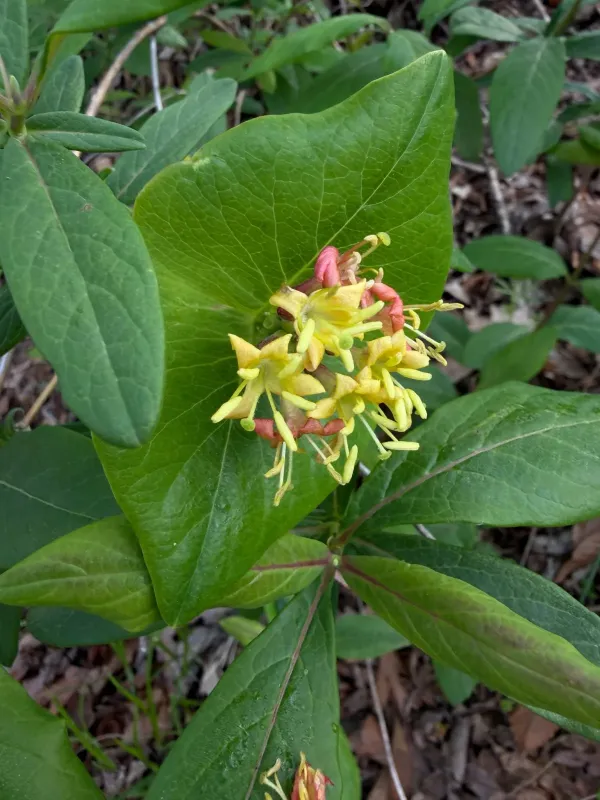
Description
Growing requirements
Limber honeysuckle (Lonicera dioica) is a deciduous climbing vine belonging to the Caprifoliaceae family. It is native to North America, typically found in open woods and thickets.
This species thrives in locations with partial to full sun exposure. It requires sturdy structures such as trellises or fences to climb, which is a vital part of its structural development.
Soil preferences include moist, well-draining, and nutrient-rich substrates. The plant is adaptable to various soil types, ranging from sandy loams to heavier clay soils if they have good drainage.
Consistent moisture is key for healthy growth. During the first few years after planting, regular irrigation is essential to establish a strong and deep root system.
Maintenance involves seasonal pruning to control its spread and promote dense foliage. It is generally very hardy and can withstand the cold climates of the temperate zone.
Main diseases and pests
The plant is susceptible to powdery mildew, which appears as a white dusty coating on the leaves, especially when air circulation is poor and humidity levels are high.
Aphids are the most common pest found on Lonicera dioica. These small insects feed on the sap of young stems and leaves, often causing significant curling and stunted growth.
Effective pest management includes monitoring the vine for early signs of infestation. In severe cases, insecticidal soaps or systemic treatments may be necessary to protect the plant.
Maintaining proper spacing between plants and ensuring adequate sunlight exposure reduces the risk of fungal infections and creates an environment less favorable for pests.
Regular sanitation, including the removal of dead or infected branches, significantly helps in maintaining the overall health and vigor of the honeysuckle vine.