
Long-leaved scabious
Knautia longifolia
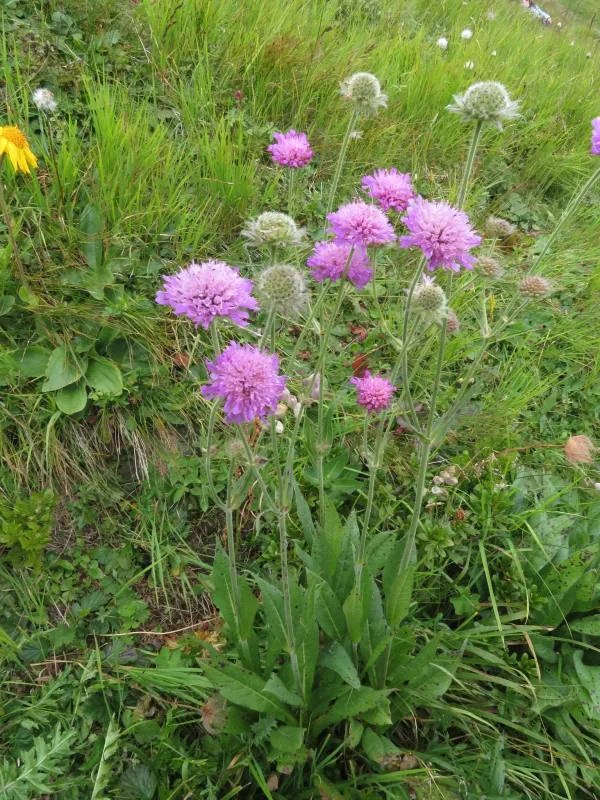
Description
Sowing dates
Sowing of Knautia longifolia is typically performed in late autumn or early spring, as the seeds require a period of cool temperatures to break dormancy.
The seeds should be sown at a depth of approximately 1 to 1.5 centimeters in well-prepared, fine-textured soil to ensure optimal moisture retention.
For large-scale cultivation, rows should be spaced 50 centimeters apart, which provides sufficient room for growth and maintenance throughout the season.
Germination usually takes about two to three weeks under favorable moisture and temperature conditions, which is essential for uniform establishment.
After emergence, thinning may be necessary if the seeding rate was too high, ensuring each plant has enough space to develop its full root and leaf system.
Growing requirements
Knautia longifolia, belonging to the Caprifoliaceae family, is a perennial herbaceous plant known for its aesthetic value and ecological benefits.
The plant thrives in sites with full sun exposure and well-draining, moderately fertile soil, which promotes robust stems and vigorous flowering.
While tolerant of various soil types, it prefers neutral to slightly alkaline pH levels, which should be monitored through regular soil testing programs.
Adequate spacing is crucial to prevent competition for nutrients and water, which is particularly important during the first year of the crop's establishment.
Its deep root system provides a degree of drought resistance, allowing it to adapt to variable weather patterns while maintaining its structural integrity.
Main diseases and pests
Powdery mildew is a common concern during warm, humid summers, requiring integrated management strategies to protect the foliage and photosynthetic capacity.
Root pathogens can become a significant issue in fields with poor drainage, often leading to stunted growth and reduced plant longevity if not addressed.
Aphids and other sap-sucking insects may infest young growth during the peak of spring, potentially spreading viral diseases throughout the crop.
Regular field scouting is recommended to identify early signs of infestation or disease, allowing for timely intervention with appropriate biological control methods.
Removing plant debris after the harvest season significantly reduces the amount of overwintering inoculum for the following year's crop cycle.
Harvesting
Harvesting for biomass or floral components is best conducted when the flowers are fully open, as this corresponds with peak physiological maturity.
Using sharp cutting equipment ensures a clean cut, preventing damage to the plant crown and promoting rapid regrowth after the harvest.
When harvesting seeds, monitoring the maturity of the flower heads is essential, as the seeds tend to disperse quickly once they are fully dried.
The harvested plant material must be processed promptly, through either drying in well-ventilated areas or immediate extraction, to preserve its chemical profile.
Proper storage conditions, including controlled humidity and temperature, are critical to maintain the viability of the harvested seed and the quality of the raw material.