
Leycesteria
Leycesteria
Leycesteria is a genus of deciduous flowering shrubs belonging to the Caprifoliaceae family. Native to the mountainous regions of the Himalayas and Southwest China, it is often known by the common name Himalayan honeysuckle, valued for its unique drooping racemes.
What the section contains

Leycesteria
The plant thrives in temperate climates and requires a sheltered position to protect it from harsh, drying winds. While it is hardy in many regions, it may require winter protection in colder zones to prevent the dieback of stems caused by severe frost.
It prefers fertile, moist, and well-draining soil. Providing a neutral to slightly acidic pH is ideal for promoting vigorous growth. Waterlogging should be strictly avoided as it can cause root rot, especially during the dormant winter months.
Leycesteria performs best in full sun to partial shade. In areas with intense summer heat, light afternoon shade is recommended to prevent leaf scorch and ensure the plant maintains its vibrant foliage throughout the growing season.
Standard care involves regular watering during dry spells and the application of balanced organic mulch around the base. This practice helps conserve soil moisture and suppresses weeds, contributing to the overall health of the shrub.
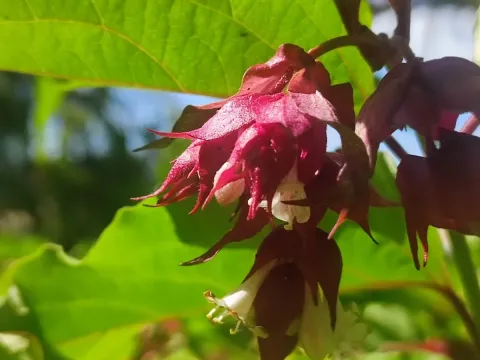
In landscaping, Leycesteria is widely used as an ornamental specimen, a focal point in borders, or as part of informal hedge plantings. Its striking purple bracts and pendulous white flowers provide a unique visual interest in late summer.
The fruit of the plant consists of small, dark purple berries that are technically edible. Although they are not commercially harvested, they serve as a valuable food source for various birds, making the shrub an excellent addition to wildlife-friendly gardens.
Pruning is essential for maintenance and should be performed in early spring. Cutting the plant back to the ground or removing old, weak stems promotes new growth, as the flowers are produced on the current season's wood.
Propagation is primarily achieved through seeds or semi-hardwood cuttings. Seeds typically require a period of stratification to improve germination rates, while cuttings can be rooted in a greenhouse environment with high humidity.
Proper spacing is crucial when establishing a group of plants. Since Leycesteria can grow rapidly in a single season, allowing adequate airflow between shrubs prevents overcrowding and contributes to a stronger, more resilient habit.
Leycesteria is generally robust, but it can be susceptible to powdery mildew under conditions of poor air circulation and high humidity. Keeping the planting site well-ventilated is the most effective preventative measure against fungal issues.
Pests are rarely a significant problem, though aphids may occasionally colonize the soft tips of new shoots during dry periods. Manual removal or the application of insecticidal soap is usually sufficient to manage minor infestations effectively.
Maintaining plant vigor through balanced fertilization and proper moisture management prevents most physiological disorders. Strong, healthy plants are naturally more resistant to the minor attacks of sucking insects or common garden fungi.
Sanitation practices, such as removing fallen leaves and pruning away diseased branches in the spring, reduce the inoculum levels of pathogens in the garden. This keeps the shrub environment clean and healthy throughout the year.
Regular monitoring during the peak growing season ensures that any potential issues are addressed early. By managing environmental factors, gardeners can ensure their Leycesteria remains a thriving and attractive feature in the landscape.