
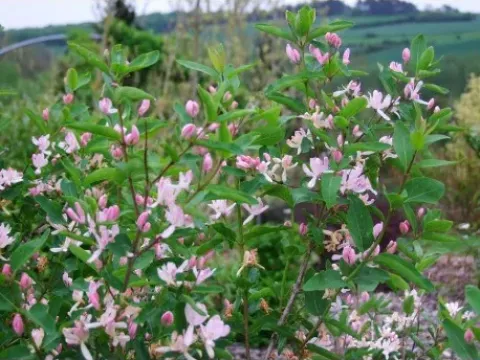
Lonicera amoena
Lonicera amoena
Lonicera amoena is a decorative shrub belonging to the Caprifoliaceae family. This species is valued for its elegant habit and vibrant flowering characteristics, making it a common choice for both public parks and residential landscapes.
What the section contains
Lonicera amoena
The plant thrives in sunny locations but demonstrates good adaptability to partial shade. To ensure optimal growth, it requires well-drained, fertile soil, ideally with a neutral pH, although it can tolerate various soil conditions if moisture levels are maintained.
Climate requirements include protection from harsh, dry winds during the dormant season. While it is hardy in many temperate zones, young specimens may require a layer of mulch to protect their root systems during the first few winters after planting.
Water management is critical during the initial establishment period and the peak summer months. Consistent soil moisture promotes healthy foliage production, although waterlogging should be avoided to prevent root rot.
Maintenance includes systematic pruning to manage the shrub's shape and size. Pruning is typically performed after the flowering season to encourage the development of new, vigorous branches and ensure a compact and aesthetic appearance in subsequent years.
Lonicera amoena can be susceptible to aphid infestations, which primarily target young leaves and tender shoots. Regular monitoring and the application of appropriate systemic insecticides can prevent significant foliage damage.
Powdery mildew represents a major fungal threat, particularly in environments with poor air circulation or high ambient humidity. Improving plant spacing and thinning the center of the shrub can significantly reduce the risk of infection.
Mites, including the spider mite, may become an issue during prolonged dry spells. Their presence is often identified by discolored or mottled foliage, necessitating the use of specialized miticides if an outbreak occurs.
Leaf rollers and other chewing insects can occasionally feed on the leaves, creating irregular holes. While rarely fatal, these pests can impact the decorative value of the specimen, requiring targeted manual removal or insecticide treatments.
Good horticultural practice involves maintaining a clean area beneath the canopy by removing debris, which reduces the potential for overwintering pathogens. Providing balanced fertilization supports the plant's natural immunity against common diseases.