
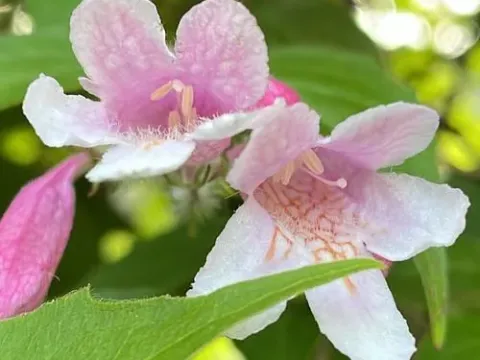
Kolkwitzia
Kolkwitzia Graebn.
Kolkwitzia Graebn., commonly known as the beauty bush, is a genus of deciduous ornamental shrubs belonging to the Caprifoliaceae family. Native to the mountainous regions of central China, this plant has become a prized specimen in horticulture worldwide due to its spectacular spring bloom.
What the section contains

Kolkwitzia
The shrub is characterized by its arching branches and prolific flowering habit. During late spring, the plant is covered in clusters of bell-shaped, pink-yellow flowers that attract pollinators. It can reach a height of two to three meters, forming a dense and attractive landscape feature.
Cultivation of Kolkwitzia requires a site with full sun exposure to ensure optimal flowering density. The plant prefers fertile, well-draining soils with a neutral or slightly alkaline pH. Proper site preparation is essential to prevent root rot caused by stagnant water.
Maintenance involves regular pruning immediately after the flowering season to remove old stems and encourage vigorous new growth for the next year. While the shrub is relatively drought-tolerant once established, it benefits from supplemental watering during extended hot, dry spells.
In terms of usage, Kolkwitzia is primarily utilized in ornamental horticulture as a specimen plant, a backdrop for perennial borders, or as part of a informal flowering hedge. It adds significant aesthetic value to gardens and public parks throughout the temperate climate zones.
Kolkwitzia is generally robust, but it can be susceptible to fungal diseases such as powdery mildew, especially in regions with high humidity or poor air circulation within the shrub canopy. Ensuring adequate space between plants is a primary preventive measure.
Insect pests such as aphids often target the tender new growth during the active growing season. If a significant infestation occurs, applying mild horticultural soaps or systemic insecticides is recommended to protect the overall vitality of the plant.
Spider mites can become a nuisance during hot, dry summer months. Regular monitoring of the foliage and increasing atmospheric humidity around the shrub can help deter these pests, while specialized miticides are effective for controlling large populations.
Nutrient deficiencies, particularly manifesting as leaf chlorosis, can occur if the soil pH is not balanced or if essential microelements are depleted. Regular soil testing and the application of balanced fertilizers can mitigate these developmental issues.
Overall, long-term health depends on consistent sanitary practices, including the removal of dead or diseased wood. This keeps the plant rejuvenated and minimizes the likelihood of secondary infections, ensuring the shrub remains productive and attractive for years.