
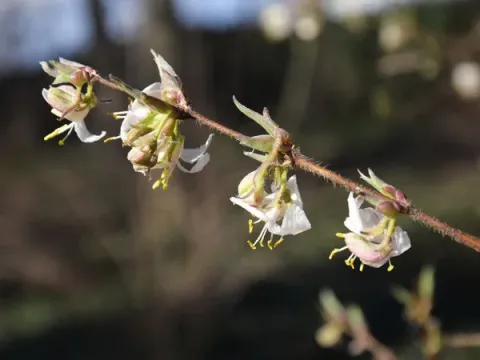
Hara honeysuckle
Lonicera harae
Hara honeysuckle (Lonicera harae) is a deciduous shrub belonging to the Caprifoliaceae family. It is native to the temperate mountainous regions of East Asia, thriving in woodland environments and shaded slopes.
What the section contains
Hara honeysuckle
The botanical structure of this shrub includes a delicate branching habit and slender stems. The foliage is typically lush during the growing season, and the plant produces distinct flowers that reflect the characteristic morphology of the Lonicera genus.
Regarding climatic requirements, the plant prefers temperate conditions with consistent moisture levels. It is not well-suited for extremely dry or arid climates without supplemental irrigation and high air humidity.
The ideal soil for this species should be well-drained, rich in organic matter, and slightly acidic to neutral in pH. A heavy soil composition requires the addition of compost or sand to improve the porosity for root health.
Agronomic management involves regular weeding and the application of organic mulch around the base to preserve moisture and regulate soil temperature during the hot summer months.
Aphids are the most common pests found on Lonicera harae. They tend to cluster on new growth, causing curling and stunted development of the leaves if left untreated during the early spring season.
Powdery mildew is a prevalent fungal issue, appearing as a white dusty coating on the leaves. It usually occurs when there is high humidity and poor airflow around the shrub, requiring careful pruning to improve ventilation.
Leaf spot diseases, caused by various fungi, may lead to necrotic patches on the foliage. To mitigate this risk, gardeners should remove and destroy any infected leaves as soon as they appear on the plant.
Spider mites can occasionally infest the shrub during dry periods, resulting in speckled or yellowing leaves. Providing adequate water and spraying the foliage with water can often deter these pests naturally.
Proper maintenance, including balanced fertilization and sanitation, remains the primary line of defense against pests and diseases, ensuring the shrub retains its ornamental value throughout the year.