
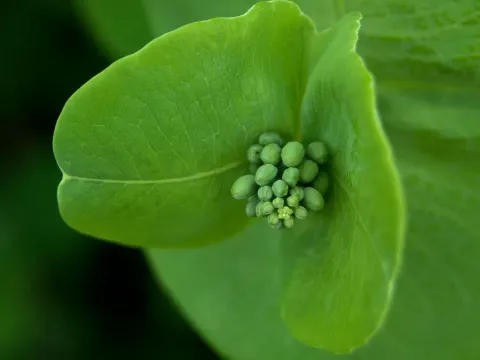
Grape honeysuckle
Lonicera prolifera
Lonicera prolifera, commonly known as the grape honeysuckle, is a deciduous climbing vine belonging to the Caprifoliaceae family. Native to North America, this plant is well-regarded for its adaptability to varied environments, ranging from rocky woodlands to open forest edges.
What the section contains
Grape honeysuckle
The plant features woody, twining stems and distinctive glaucous-green foliage. One of its most notable botanical characteristics is the perfoliate leaf arrangement, where pairs of leaves unite around the stem just below the flowering clusters, creating a unique visual effect.
Grape honeysuckle thrives in locations with full sun to partial shade, provided it has a sturdy support system such as a trellis, arbor, or fence. Its hardiness allows it to survive in diverse climatic conditions, provided the root zone is protected from extreme desiccation.
The ideal soil for Lonicera prolifera is fertile, moist, and well-drained. While it can adapt to various soil types, enriching the site with organic compost during planting significantly enhances its vigor and promotes abundant flowering in late spring to early summer.
In landscaping, this honeysuckle is primarily utilized as a high-performance ornamental climber. It is favored for its aesthetic appeal, providing rapid coverage for vertical structures and creating lush, green screening in domestic gardens and public parks.
Aphids are the most frequent pests, typically clustering on young, succulent shoot tips. Management involves manual removal, water sprays, or the application of horticultural soaps to prevent damage to the new foliage.
Powdery mildew is a common fungal challenge, especially in areas with stagnant air or high humidity. Ensuring proper plant spacing and choosing an open, airy location helps to mitigate the risk of fungal outbreaks significantly.
Leaf spot diseases may appear during wet and cool weather cycles, causing discolored patches on the leaves. Removing infected foliage and applying preventative fungicides can help maintain the plant's health and appearance throughout the season.
Spider mites can become problematic during prolonged periods of drought and high temperatures. Regularly misting the foliage or ensuring adequate soil moisture helps to deter these pests and maintain plant vigor.
Leafrollers may occasionally cause cosmetic damage by curling leaves into shelters. While rarely fatal, inspecting the vines during the early growth stages is recommended to keep infestations at a manageable level.