
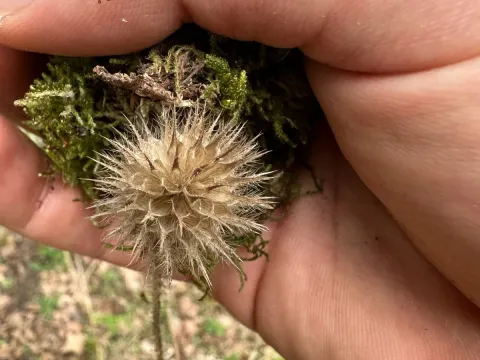
Hairy teasel
Dipsacus pilosus
Hairy teasel (Dipsacus pilosus) is a biennial herbaceous plant belonging to the Caprifoliaceae family. It is characterized by forming a rosette of basal leaves in its first year and developing a flowering stem in its second year.
What the section contains
Hairy teasel
The native range of this species covers much of Europe and temperate parts of Asia. It is typically found in moist environments, such as forest edges, riparian zones, and shaded meadows where moisture levels remain consistent.
For cultivation, this crop requires fertile, humus-rich, and well-drained soils. It prefers neutral to slightly alkaline pH levels and thrives in areas where soil moisture is maintained throughout the growing season.
In terms of climate, hairy teasel is hardy and adaptable to temperate zones. It requires sufficient rainfall and tends to perform poorly in excessively arid or high-temperature environments that lack irrigation.
The economic utility of the plant includes its use in ornamental gardening and apiculture. Its inflorescences are attractive to pollinators, making it a valuable addition to nectar-rich planting schemes.
Hairy teasel is susceptible to fungal diseases such as powdery mildew, especially during periods of high humidity and poor air circulation. This manifests as a white coating on the leaves and stems.
Root rot is a significant concern in waterlogged soil conditions. Poor drainage can lead to the deterioration of the plant's root system, often resulting in sudden wilting and plant death.
Aphids are the most common pests that affect this crop. By feeding on the sap of young shoots, they can severely stunt growth and reduce the overall aesthetic and reproductive success of the plant.
Caterpillars of various moth species may feed on the foliage. While these infestations are usually manageable, significant damage to the leaf area can weaken the plant and make it susceptible to secondary infections.
Effective management strategies include ensuring proper spacing between plants to enhance ventilation and regular monitoring for early signs of pest infestation or disease development.