
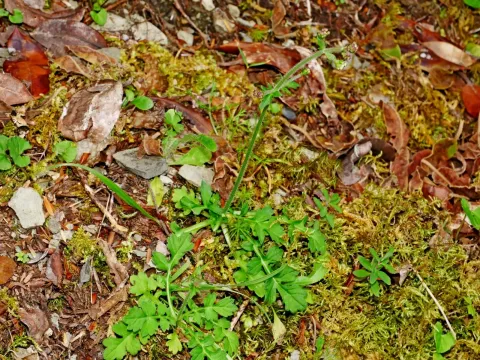
Triplostegia
Triplostegia
Triplostegia is a genus of perennial herbaceous plants belonging to the Caprifoliaceae family. In their natural habitat, these plants propagate primarily through seeds dispersed by environmental factors.
What the section contains

Triplostegia
Under cultivation conditions, seeds should be sown in a light, well-draining substrate during early spring. Stratification is highly recommended to break seed dormancy and ensure uniform germination.
The seeds are small and require shallow sowing, barely covered with soil, to receive enough light. Keeping the substrate consistently moist under a cover helps establish a stable environment for seedling development.
Starting plants in containers allows for better monitoring during their slow initial growth phase. Once seedlings have developed a robust root system, they can be transplanted to a permanent shaded site.
Vegetative propagation, such as division of the rhizomes, is another viable method for multiplying the plants. This approach ensures faster establishment and maintains the characteristics of the parent plant.
Native to the high-altitude regions of the Himalayas and East Asia, Triplostegia thrives in cool, moist climates. It is best suited for environments that mimic these alpine conditions.
The soil should be nutrient-rich, humus-heavy, and slightly acidic or neutral. Excellent drainage is essential, as the roots are highly susceptible to rot if water persists around them for extended periods.
Triplostegia prefers locations with partial shade. Intense, direct sunlight can cause leaf chlorosis and rapid dehydration, which negatively impacts the plant's health during the summer months.
Regular mulching with organic material helps maintain soil moisture levels and keeps the roots cool. This practice is crucial in regions where summer temperatures can fluctuate significantly.
The plant is generally cold-hardy, but it requires protection from desiccating winter winds. In regions with severe winters and little snow cover, adding protective layers around the base is advisable.
Fungal diseases, often triggered by poor ventilation and excess soil moisture, pose the greatest threat to Triplostegia. Proper spacing between plants is critical to prevent the spread of pathogens.
Slugs and snails are frequent pests that target young, succulent foliage. Implementing physical barriers or using environmentally safe baits can help manage these populations in damp areas.
While generally resistant to most common garden pests, environmental stress can weaken the plant, making it more susceptible to opportunistic infections. Maintaining optimal growing conditions is the best defense.
If disease symptoms appear, applying systemic fungicides can help control the infection. It is important to treat plants early to prevent long-term damage to the delicate root structures.
Preventative cultural practices, such as ensuring adequate airflow and avoiding overhead irrigation, are the most effective ways to mitigate the risk of pest and disease outbreaks.