
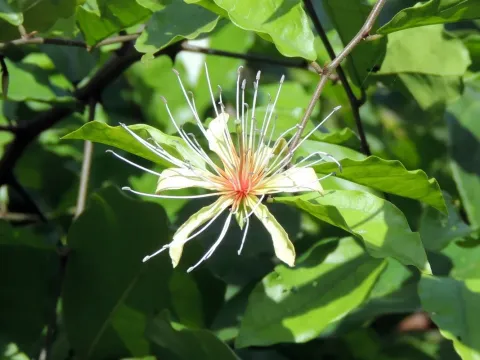
Red-fruited caper
Capparis erythrocarpos
The Red-fruited caper (Capparis erythrocarpos) is a perennial shrub belonging to the Capparaceae family. It is natively distributed across the tropical regions of Africa, thriving in diverse semi-arid habitats.
What the section contains
Red-fruited caper
This species requires well-drained, sandy, or loamy soil conditions to prevent root rot. Being highly adapted to drought, the plant maintains its metabolic functions even when water availability is significantly limited.
Light intensity is paramount for the health of Capparis erythrocarpos. It is a heliophilic plant that demands full exposure to direct sunlight to ensure vigorous stem growth and high-quality floral production.
Climatic requirements involve constant warm temperatures. The plant is extremely sensitive to frost and cold stress, which necessitates an environment that remains frost-free throughout the entire growing cycle.
Agronomic management includes careful monitoring of soil moisture levels. Although it is drought-tolerant, supplemental irrigation during the peak flowering stage improves overall plant vitality and yield consistency.
The economic focus of the Red-fruited caper is on harvesting flower buds before they bloom. This harvesting method ensures that the delicate flavor compounds are preserved for culinary and medical use.
Manual harvesting is the standard practice due to the plant's growth habit. Workers pick the buds at specific intervals, ensuring that the younger buds are left to mature for subsequent picking cycles.
The fruits, known for their distinct red color upon maturation, are secondary products. Their physiological development is carefully monitored to distinguish between harvest readiness and over-ripeness.
Post-harvest treatment usually involves curing or brining. This essential processing step eliminates bitterness and stabilizes the product, making it shelf-stable for international trade.
Effective plantation management requires pruning to stimulate new growth. Proper branch management ensures that the plant remains productive for several years, maximizing the return on investment for the farmer.