
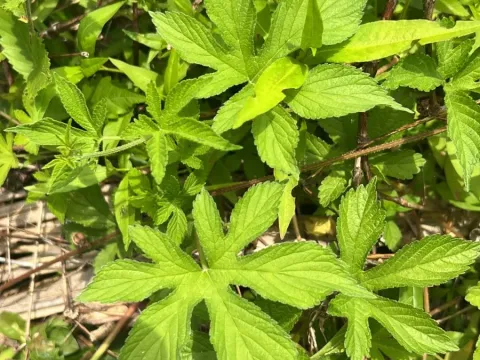
Japanese hop
Humulus scandens
Japanese hop is a fast-growing annual vine belonging to the Cannabaceae family. Seeds are typically sown directly into the soil in early spring once the danger of frost has passed and the ground has warmed up.
What the section contains
Japanese hop
To ensure a longer decorative season, gardeners often start seeds indoors in late March. Using seedling trays allows the plant to establish a robust root system before being transplanted into the outdoor garden space.
The seeds benefit from cold stratification for about two to three weeks before planting. This process helps to break dormancy and ensures a more uniform germination rate across the seed batch.
Planting depth should be kept shallow, approximately 1 to 2 centimeters deep. Constant soil moisture is crucial during the germination phase to support the emerging sprouts until they develop their first true leaves.
When planting outdoors, space the seeds or seedlings about 50 centimeters apart. This spacing provides enough room for the vigorous vines to expand without competing too intensely for light and soil nutrients.
Humulus scandens thrives in fertile, well-draining soils with a neutral pH level. It prefers sunny locations, although it can tolerate partial shade if the climate is particularly hot during the peak summer months.
Adequate moisture is the most critical factor for successful cultivation. The plant requires regular watering, especially during dry spells, as it has a high transpiration rate and will wilt quickly if the soil becomes too dry.
A sturdy support system is essential for this plant. Being a vigorous climber, it needs fences, trellises, or pergolas to reach its full height potential, often climbing up to 3 or 4 meters in a single growing season.
Regular fertilization with a balanced, nitrogen-rich fertilizer during the early growth phase promotes lush, green foliage. As the season progresses, a fertilizer with higher phosphorus content can support overall plant health.
While the plant is highly adaptable, it is not frost-tolerant. In temperate regions, it completes its life cycle in one year, meaning it must be re-planted each spring to maintain the green screen or decorative feature in the landscape.
Spider mites are the most significant pest affecting Japanese hop, especially in hot, dry environments. They cluster on the underside of leaves, causing yellowing and eventual browning of the foliage if left untreated.
Powdery mildew is a common fungal threat that thrives in damp, poorly ventilated areas. It manifests as a white, dusty layer on the leaves and stems, which can weaken the vine if not managed with appropriate fungicides.
Aphids can also be a nuisance, particularly on the tender new growth of the vine. These pests extract plant sap, leading to stunted shoots and distorted leaf development throughout the summer.
Effective management includes maintaining proper spacing between plants to improve airflow and monitoring the foliage regularly for any early signs of infestation or disease to intervene quickly.
- Spider mites (miticide applications).
- Powdery mildew (fungicide and pruning).
- Aphids (insecticidal soap or systemic insecticides).
- Root rot (prevented by ensuring soil drainage).