
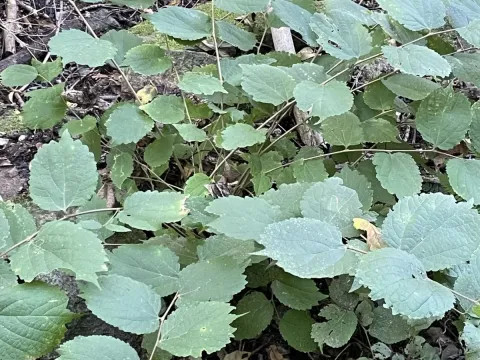
Korean hackberry
Celtis koraiensis
The propagation of the Korean hackberry (Celtis koraiensis) is primarily achieved through seeds, which require stratification to break dormancy. Sowing can be performed in the autumn to allow for natural winter chilling, or in the spring after several months of cold, moist storage.
What the section contains
Korean hackberry
When sowing in the autumn, seeds are placed at a depth of 2–3 cm in well-prepared soil. Applying a layer of mulch is essential to protect the seeds from extreme temperature fluctuations and to maintain consistent soil moisture throughout the winter months.
For spring sowing, seeds should be pre-treated by soaking them in water followed by cold stratification at temperatures around 5°C. This preparation mimics natural conditions and significantly improves the uniformity and speed of germination.
Once seedlings emerge, they should be protected from direct, intense sunlight during the first few weeks. Careful weeding is necessary as the young trees grow slowly initially and can be easily outcompeted by aggressive weeds.
After reaching a sufficient size, the seedlings can be transplanted into nursery containers or to a permanent location. The transplanting process is most successful when carried out during the early spring before the onset of active growth.
The Korean hackberry is a deciduous tree belonging to the Cannabaceae family, naturally occurring in temperate forests of East Asia. It thrives in sunny locations but displays a high degree of tolerance for partial shade, making it a versatile choice for various landscape settings.
The species prefers deep, fertile, and well-drained loam soils. However, it is remarkably adaptable and can tolerate a variety of soil types, including those that are slightly alkaline or compacted, which is a common feature of urban environments.
In terms of climate, the Korean hackberry is hardy and can withstand moderate winters. It is also drought-tolerant once established, although regular watering during the first few years of growth is crucial for developing a robust root system.
Routine maintenance includes occasional fertilization in the spring to support vigorous branch growth. Minimal pruning is required, primarily to remove dead wood or to train the tree for a desired architectural shape in urban parks.
This tree is highly valued for its resistance to air pollution and urban stresses. Its ability to grow in tough conditions makes it an excellent candidate for roadside planting and municipal greening projects.
The Korean hackberry is utilized in both forestry and landscape design. Its primary role in forestry involves soil stabilization and land reclamation, as its deep root system is highly effective at preventing erosion on steep or degraded slopes.
The wood of this tree is known for its strength, hardness, and durability. Historically, it has been used in the production of high-quality tools, sports equipment, and fine furniture, where material density and resilience are key requirements.
The tree produces small fruits that are edible and serve as a significant food source for local wildlife, particularly birds. By providing nutrition, the hackberry helps to support local ecosystem biodiversity in forest areas.
In landscaping, the species is appreciated for its aesthetic value, featuring an attractive, spreading canopy that provides generous shade. It serves as an excellent feature tree in large parks and expansive gardens.
When managed as a timber crop, consistent thinning and pruning ensure the development of straight, high-quality trunks. With proper silvicultural management, the hackberry can provide valuable timber resources over a 30-year rotation period.
While generally hardy, the Korean hackberry may occasionally suffer from powdery mildew, especially in locations with high humidity and poor air circulation. Symptoms appear as a white fungal growth on the leaves, which can be managed with proper thinning.
Pests such as aphids and leaf-chewing caterpillars can cause damage to new foliage. Integrated pest management strategies, such as introducing natural predators or using horticultural oils, are often sufficient to keep pest populations at bay.
Mechanical damage to the trunk or branches can provide entry points for pathogens and wood-rotting fungi. Therefore, care must be taken during soil cultivation and maintenance to avoid any physical trauma to the bark.
Sanitation practices are essential for disease control. Removing fallen leaves and infected branches reduces the inoculum levels for fungal infections, helping to keep the plantation healthy and productive.
Site selection also plays a role in disease prevention; ensuring proper spacing between trees provides the ventilation necessary to discourage the development of most common bacterial and fungal diseases.