
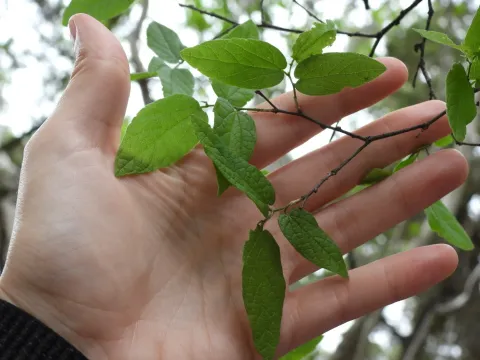
Lindheimer hackberry
Celtis lindheimeri
Lindheimer hackberry (Celtis lindheimeri) is a tree species belonging to the Cannabaceae family. It is native to the Edwards Plateau region of Texas and parts of Mexico, where it thrives in rugged, limestone-rich terrain.
What the section contains
Lindheimer hackberry
This species is highly prized for its exceptional drought tolerance and ability to withstand extreme summer heat. It prefers well-drained, rocky or alkaline soils and generally struggles in consistently wet or poorly aerated conditions.
The tree requires full sun exposure to maintain its characteristic structure and density. Inadequate sunlight leads to thin, spindly growth, which diminishes both the health and aesthetic value of the specimen in a landscape setting.
Botanically, it is known for its grey bark that develops a unique, warty texture as the tree matures. The leaves are ovate-oblong with serrated margins, contributing to a light, graceful foliage effect that suits many garden styles.
From an agricultural and horticultural perspective, this species is used for erosion control on slopes and as a hardy ornamental tree in municipal planting programs. Its strong wood makes it resilient against wind and environmental stress.
The most common disease affecting Lindheimer hackberry is powdery mildew, which typically appears during humid periods or when air circulation within the canopy is restricted. Proper spacing and thinning help prevent this issue.
Scale insects and psyllids are frequent pests that can infest the foliage, causing discoloration. Integrated pest management, including the use of dormant oils or systemic insecticides, is effective in managing these populations.
Root rot is a major threat caused by overwatering or planting in heavy, clay-rich soils that do not provide adequate drainage. Establishing the tree in well-draining substrates is the primary preventative measure.
Mistletoe is a parasitic plant that can colonize the branches of older specimens. Mechanical pruning of the infected branches is necessary to prevent the parasite from spreading and sapping the tree's vital resources.
Regular inspections of the canopy and bark are recommended to detect early signs of stress. Given its origin in arid environments, keeping the tree healthy is largely a matter of mimicking its natural, dry habitat conditions.