
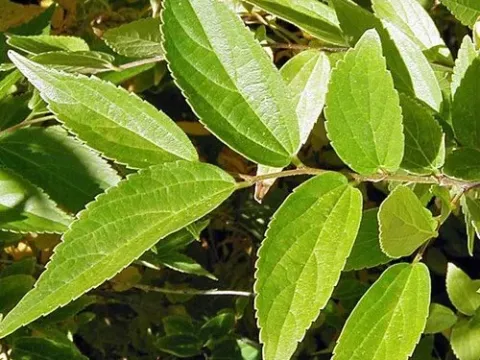
Julian's hackberry
Celtis julianae
Propagation of Julian's hackberry is primarily achieved through seeds. Sowing is typically performed in autumn before winter or in spring after a thorough stratification period of two to three months at cool temperatures.
What the section contains
Julian's hackberry
Before spring planting, seeds should be soaked in warm water for 24 hours to soften the seed coat. They are sown at a depth of approximately 2-3 centimeters in well-drained, nutrient-rich soil to ensure optimal germination success.
In nursery settings, greenhouse conditions are used to maintain humidity and heat. Seedlings are sensitive to intense direct sunlight during the first few weeks, so partial shading is recommended until they become established.
Transplanting young trees to their permanent location is best done after 2 or 3 years of growth. A spacing of at least 3-4 meters between trees is necessary to provide enough room for the mature canopy to spread.
Initial fertilization is generally applied one year after permanent planting, once the root system has stabilized and begun active growth in the new site.
Julian's hackberry is a member of the Cannabaceae family, native to the mountainous forests of central and southern China. It thrives in temperate climates and requires protection from harsh, sub-zero winter winds during its early years.
The tree prefers deep, fertile, and well-drained loamy soils. It has a low tolerance for waterlogged sites, which makes the provision of good soil drainage essential for the health of the root system.
As a light-demanding species, Julian's hackberry performs best in full sun. While young saplings may tolerate light shade, mature trees require ample sunlight to develop a dense and healthy structure.
The species shows moderate drought tolerance, but consistent irrigation during the peak of summer is crucial for maintaining foliage quality and preventing premature leaf drop during heatwaves.
This tree is relatively well-suited for urban landscapes, provided that the soil is not overly compacted and that it receives sufficient care during its establishment phase.
The main threats to Julian's hackberry include fungal infections that thrive in high humidity or stagnant air conditions. Proper crown management and pruning are essential to ensure adequate airflow.
Pests such as aphids and spider mites can cause significant damage to young leaves and tender shoots. Regular inspections are advised during the spring and early summer growing seasons.
Powdery mildew is a common disease affecting the foliage, manifesting as a white, dusty layer. Fungicidal applications are recommended if early signs of the infection appear on the leaves.
Root rot is a severe condition often caused by overwatering or poor drainage. Once established, it can be fatal to the tree, making preventative drainage management the best defense.
Sanitary pruning to remove dead or diseased branches is a vital practice. It minimizes the risk of pathogens spreading and keeps the tree's overall vigor at a high level.