
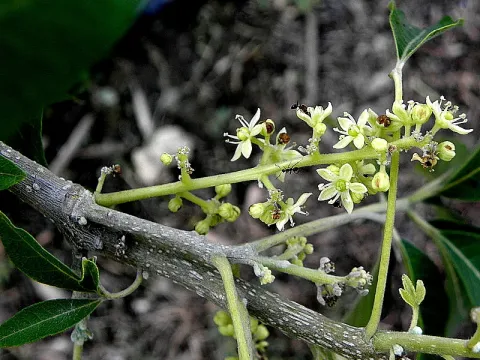
Hackberry (broadleaf)
Celtis latifolia
The broadleaf hackberry (Celtis latifolia) is a member of the Cannabaceae family, recognized for its robustness and adaptability to various environmental conditions. Native to warm temperate regions, it has evolved to thrive in areas where other species struggle due to climatic stress.
What the section contains
Hackberry (broadleaf)
This species is highly valued for its drought tolerance, making it an excellent candidate for reforestation and landscaping in arid or semi-arid climates. The tree develops a deep root system that anchors it firmly and allows it to access subsoil moisture during long periods of summer heat.
Regarding soil preferences, it is not overly demanding but performs best in well-drained, alkaline to neutral soils. It does not tolerate waterlogging, so planting on mounds or slopes is recommended in areas with heavy clay or poor drainage to prevent root rot.
In terms of agricultural management, the broadleaf hackberry requires minimal maintenance once established. Young trees benefit from occasional structural pruning to ensure a strong scaffold, while mature trees are generally self-sustaining and require little more than occasional health check-ups.
The utility of this crop extends beyond aesthetics. Its timber is known for being hard, heavy, and flexible, which has historically made it useful for agricultural tool handles and furniture making. Furthermore, it serves as an essential food source for local bird populations during the winter months.
Like many hardy trees, the broadleaf hackberry is relatively resistant to major pests. However, powdery mildew can occur during seasons with high humidity and poor airflow. Managing plant spacing and thinning the canopy can significantly mitigate these risks.
Some localized infestations of aphids or lace bugs may occur. While these pests can cause cosmetic damage to the foliage, they rarely affect the overall vitality of the tree unless the infestation is persistent and severe over several growing seasons.
Canker diseases are the most significant threat to the plant's structural integrity. These are often introduced through wounds caused by improper pruning or mechanical impact from lawn maintenance equipment, highlighting the need for careful handling of the trees.
Winter injury can occur in young specimens if they are planted outside their hardiness zone or exposed to extreme temperature fluctuations. Protecting the bark of young trees during their first few years can prevent sunscald and frost damage.
Regular sanitation, such as the removal of dead or crossing branches, is the most effective management strategy. By maintaining optimal canopy density, growers can ensure the tree remains vigorous and less susceptible to the onset of opportunistic infections.