
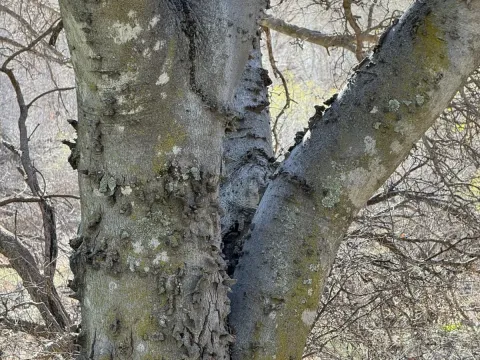
Netleaf hackberry
Celtis reticulata
The propagation of the Netleaf hackberry (Celtis reticulata) is predominantly achieved through seeds. For optimal results, seeds should be sown in the autumn immediately after harvesting to allow for natural stratification throughout the winter months.
What the section contains
Netleaf hackberry
If spring sowing is preferred, the seeds must undergo a stratification process at temperatures between +1°C and +5°C for approximately 60 to 90 days. This overcomes dormancy, as the seed coat is naturally thick and resistant to environmental moisture.
Sowing depth should be kept shallow, typically 2–3 centimeters. Providing a consistent, light moisture regime is essential during the germination phase to ensure the radicle emerges successfully without rotting in waterlogged soil.
Seedlings exhibit slow initial growth, requiring patience and weed management during the first two years of development. Ensuring sufficient space between seedlings allows for stronger root systems to establish before transplantation.
While vegetative propagation via cuttings is possible, it is technically demanding. It requires high humidity chambers and hormonal treatment to stimulate root development, making it less common than seed propagation for large-scale forestry.
The Netleaf hackberry is a hardy member of the Cannabaceae family, native to the western regions of North America. It is naturally adapted to rugged terrain and harsh environmental stressors.
This species is highly drought-tolerant and thrives in a variety of soil types, including rocky, gravelly, and alkaline substrates. Its ability to tolerate low-nutrient soils makes it an excellent candidate for ecological restoration and soil stabilization.
The tree is strictly light-demanding. It requires full sun exposure to maintain a dense, symmetrical crown and to ensure proper lignification of the branches. Shaded environments often result in sparse growth and reduced vigor.
Climate adaptability is one of the key strengths of this species. It withstands significant temperature extremes, from hot, arid summers to freezing winter temperatures, making it a reliable tree for diverse climatic zones.
Proper site selection must include good soil drainage. Although it resists drought well, the root system is sensitive to persistent saturation, which can lead to fungal issues and compromised stability during strong winds.
The primary health risks to the Netleaf hackberry involve fungal infections of the bark and foliage, usually triggered by stagnant air or excess humidity. Proper spacing helps mitigate the risk of mildew and similar pathogens.
Pest issues include sap-sucking insects like aphids and scale insects, which can weaken the tree if allowed to multiply unchecked. Monitoring for these pests in the spring is recommended to prevent significant leaf distortion.
Defoliating caterpillars may occasionally feed on the foliage. While these insects rarely kill a mature tree, significant outbreaks on young plants may require biological or chemical intervention to preserve the tree's vitality.
Mechanical damage to the trunk or branches during landscaping operations often serves as a point of entry for pathogens. All pruning should be performed using sharp, sterilized tools during the dormant season to minimize risks.
Overall, the Netleaf hackberry is considered a resilient and low-maintenance tree. When placed in an environment that matches its ecological requirements, it shows excellent resistance to most common tree diseases and pests.